Volume Analysis | Flash Update – 10.5.26
DOJI Know?
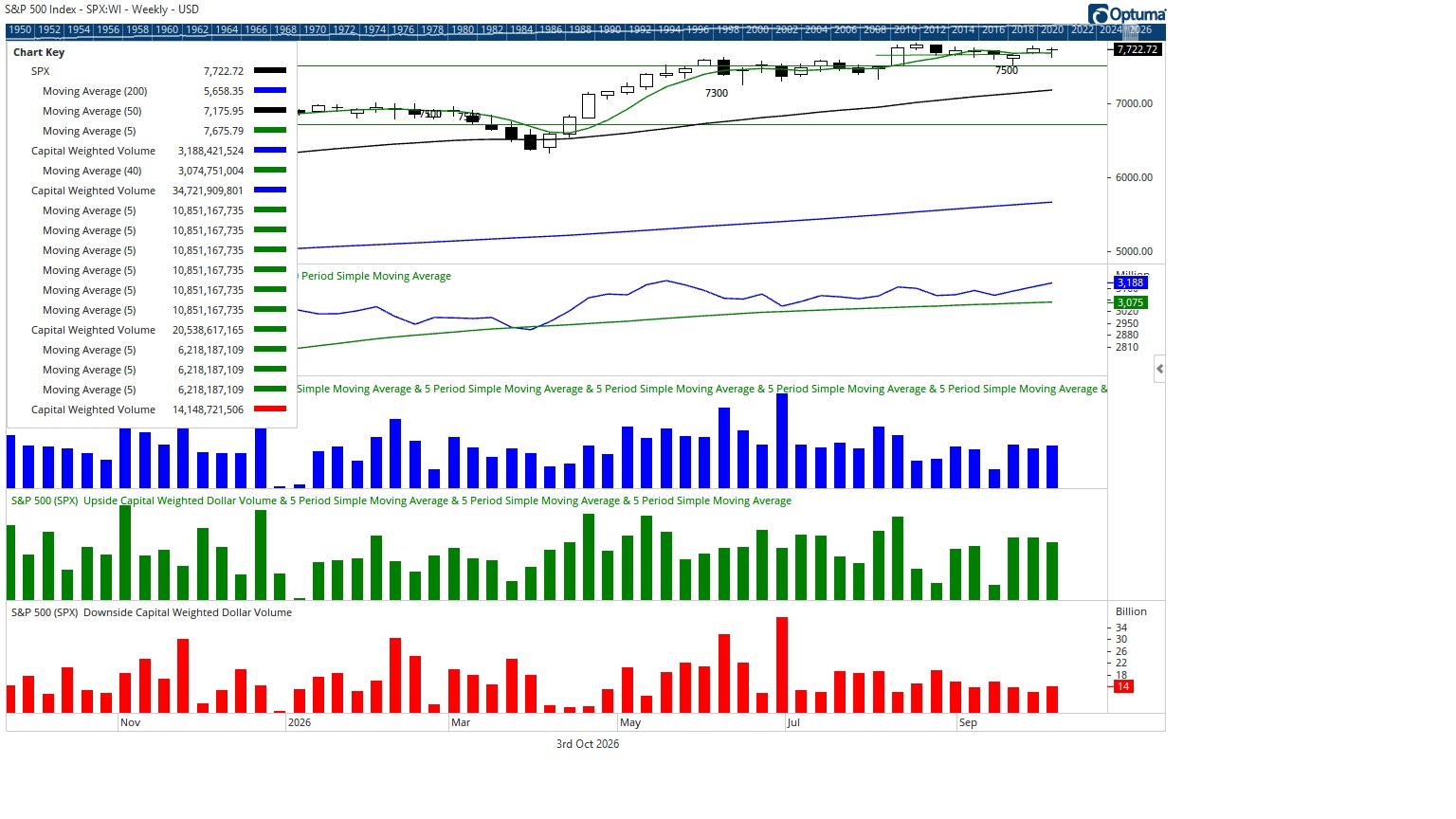
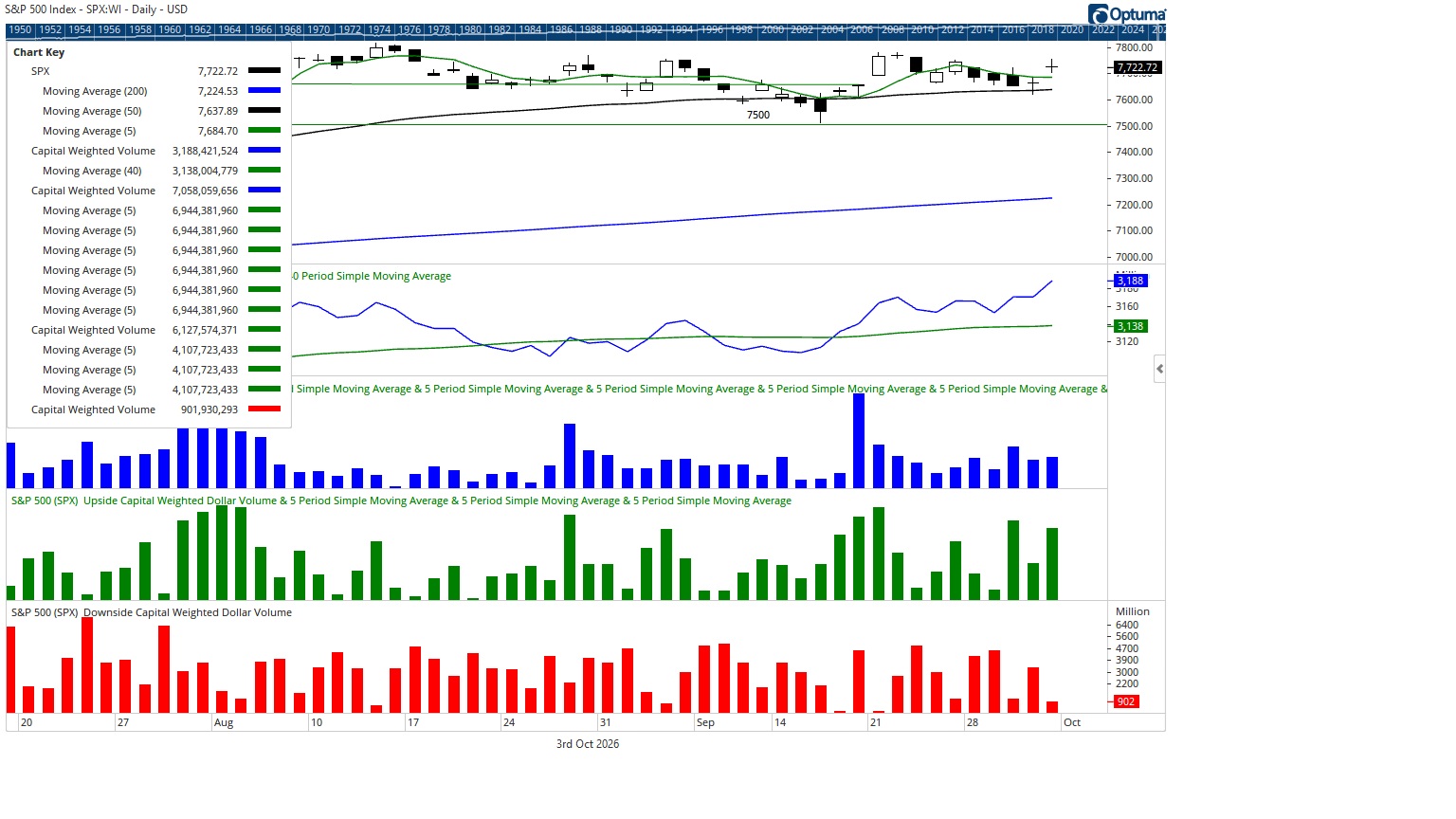
The week closed with the market standing at another crossroads. Wednesday, the final trading day of the 3rd quarter, the S&P 500 slipped -0.25%, yet 87% of Capital Weighted Dollar Volume registered as inflows. Friday then delivered another unusual field report, the S&P 500 gapped higher, closed near its open, formed a doji star and 87% of capital flows again registered as inflows.
For the week, the S&P 500 closed down -0.27%, finishing close to where it opened and forming another doji weekly candle. In Japanese candlestick analysis, a doji often signals indecision, a pause, or a potential reversal depending upon its location. After last week’s upside gap, this week produced an outside low on Thursday, then rallied off the 50-day moving average near 7616. Price bounced off resistance while capital advanced.
On the week, 59% of both Capital Weighted Volume and Capital Weighted Dollar Volume moved to the upside. Price paused, but capital pressed forward. In our work, price is not the market’s full discounting mechanism; price is the market’s testimony. Price is the effect of trading activity. Hence volume leads price. Capital flows confirm or contradict conviction serving as the polygraph to the market’s testimony.
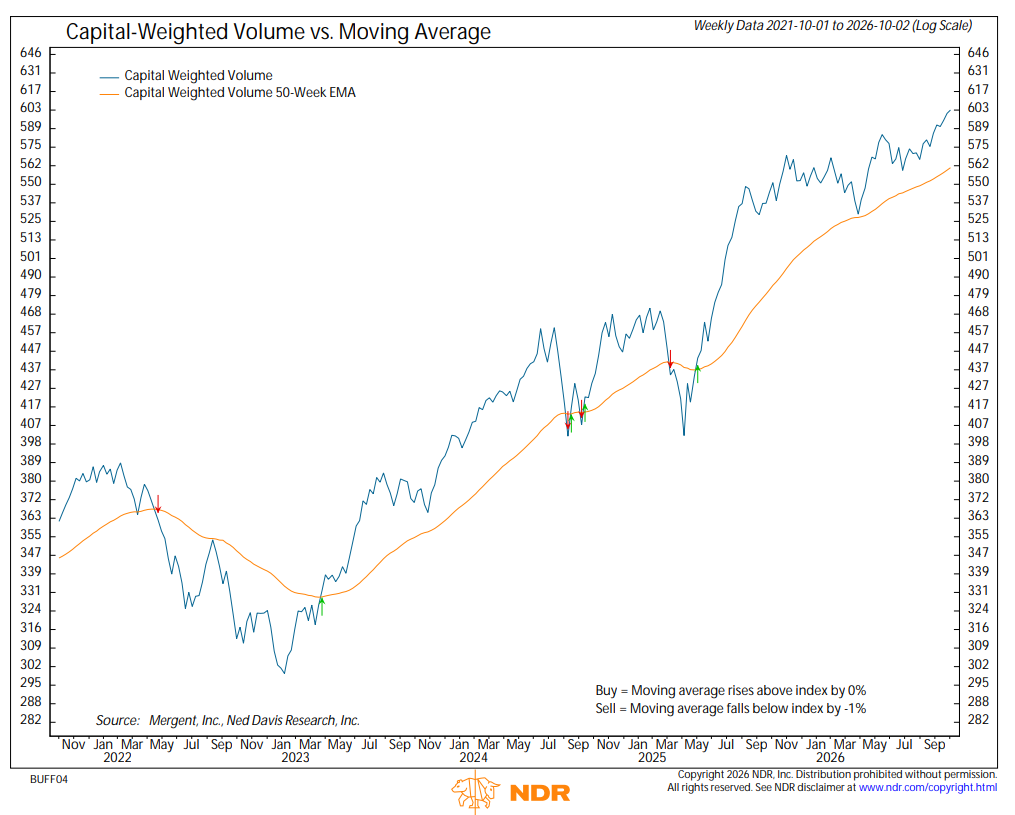
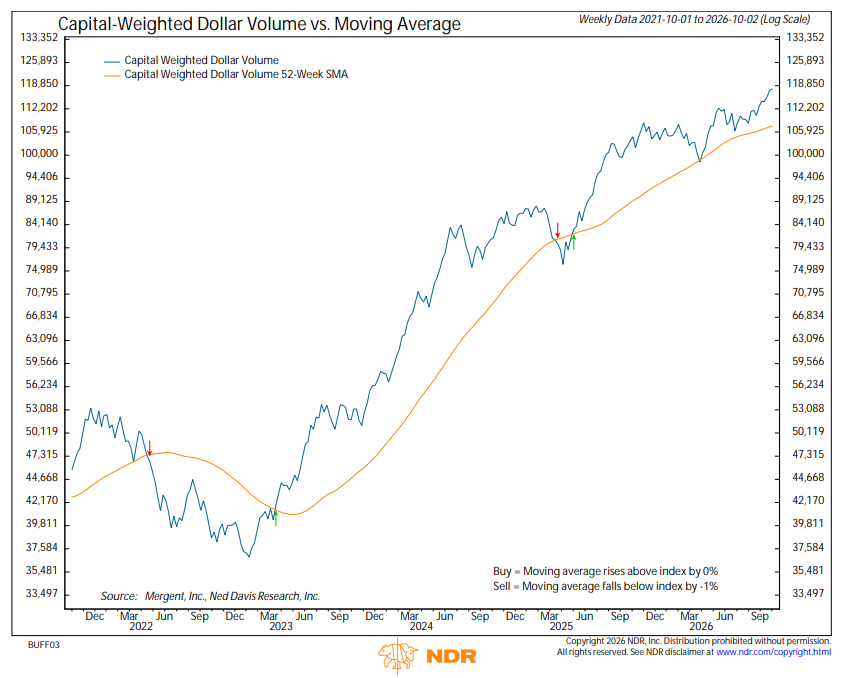
Most importantly, the trends of Capital Weighted Volume and Capital Weighted Dollar Volume continued to put up new all-time highs week after week. This is the strongest evidence on the bulls’ side. Even though the S&P 500 stalled at resistance, the supply lines continued to advance the field.
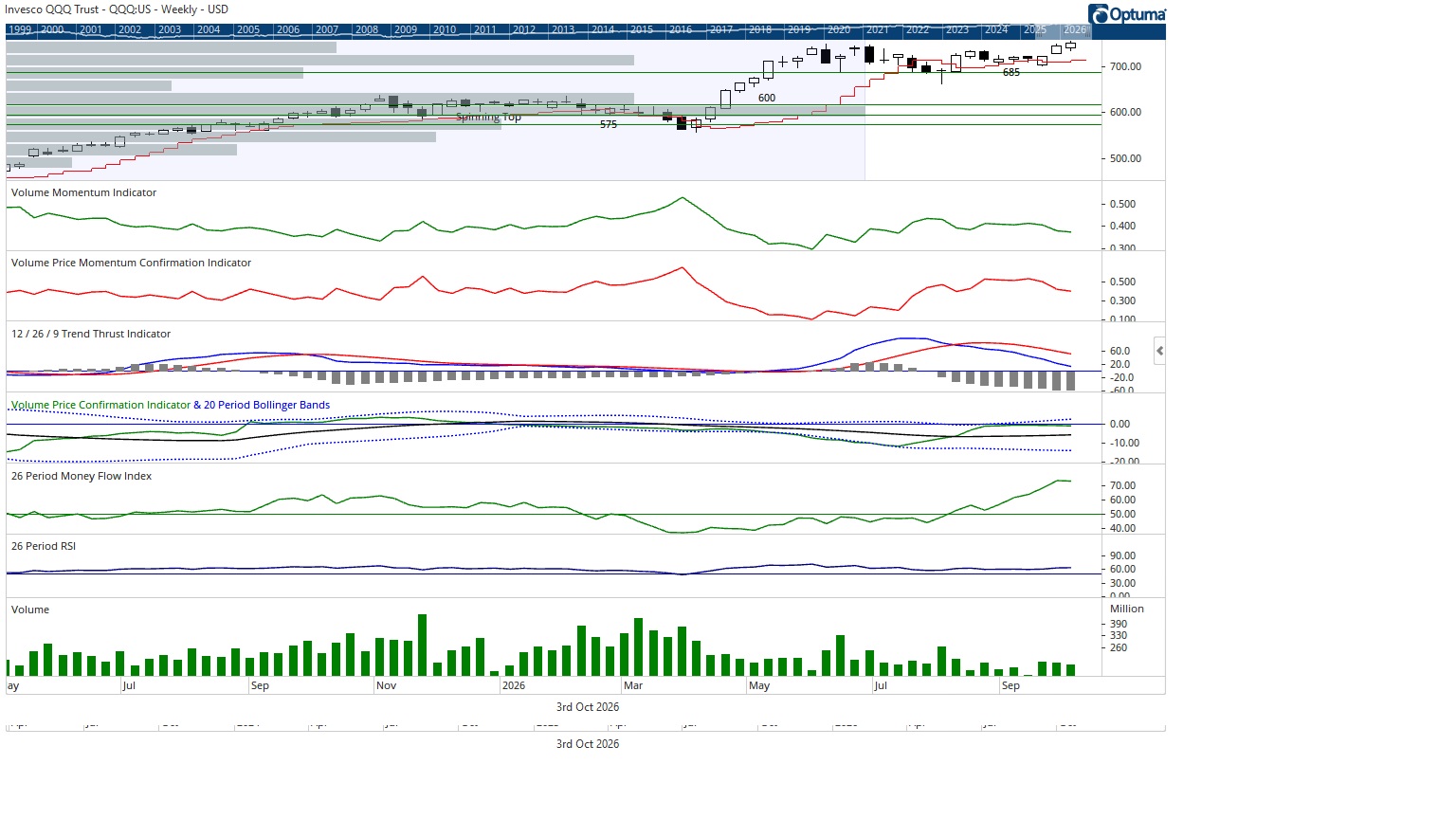
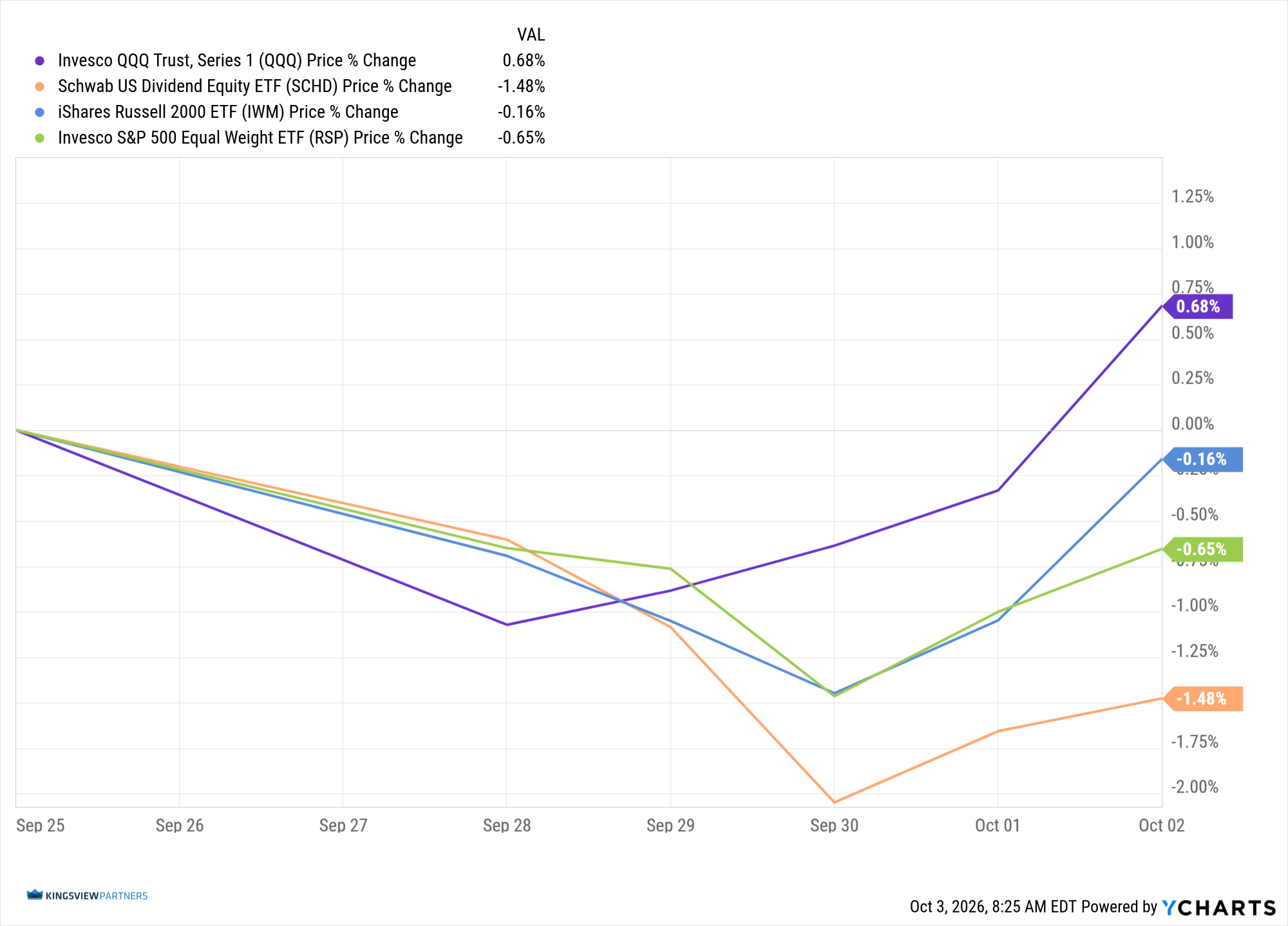
The generals, represented by the Invesco QQQ Trust Series 1, continued to press the attack, advancing 0.68% on the week. Although the generals failed to close above the much-referenced 750 resistance line, they did make another new all-time intraday high and a new closing high on Friday. Volume was modest, but the Invesco QQQ Trust Series 1 volume profile continues to look attractive. A weekly close above 750 on strong volume would confirm a bullish breakout and place the generals firmly back in commanding leadership.
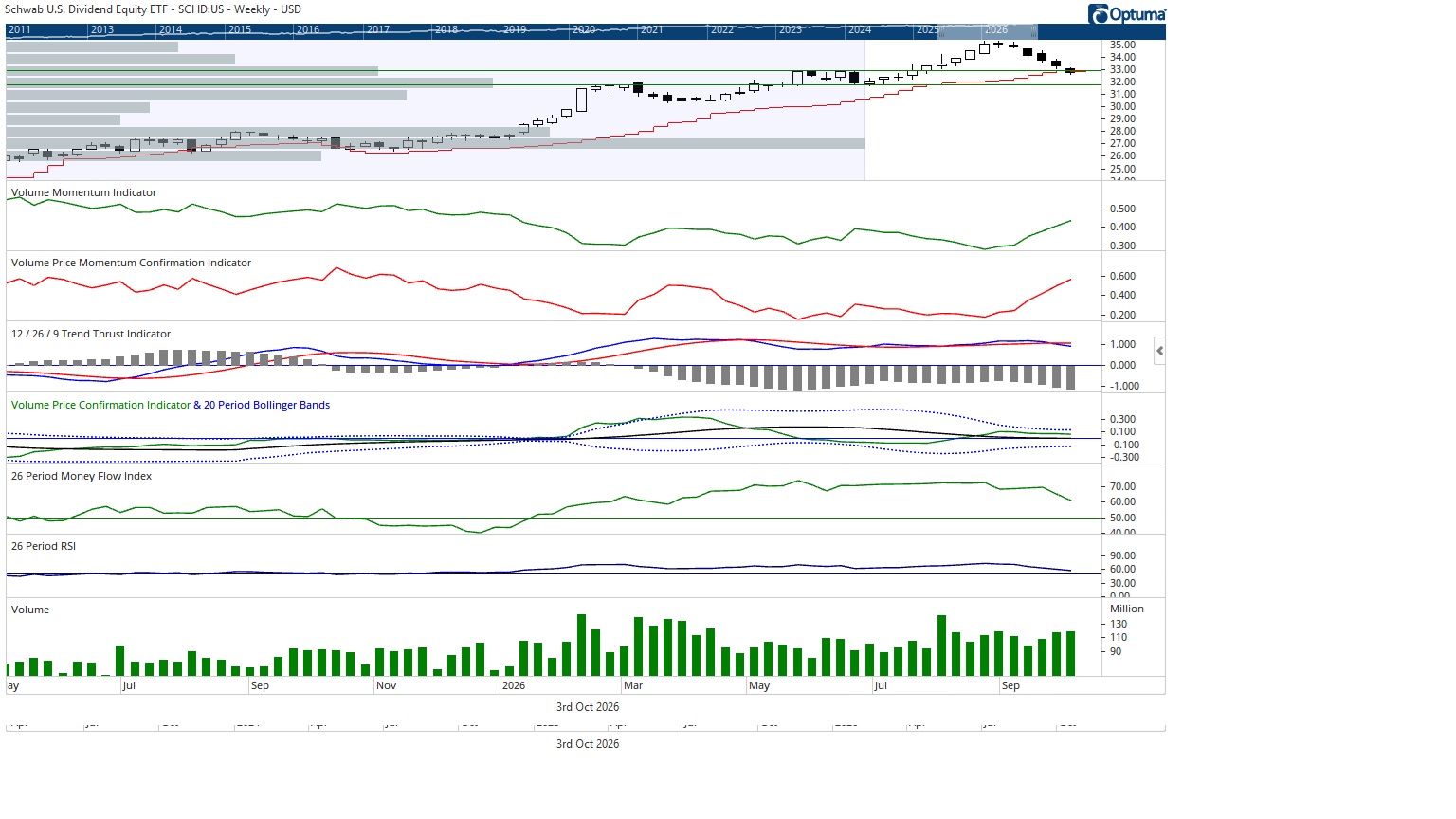
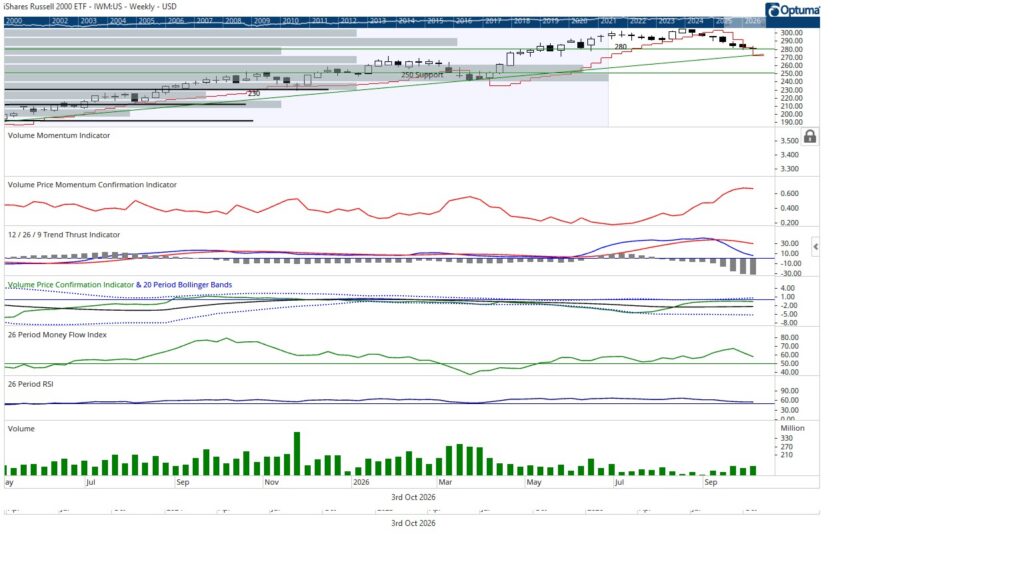
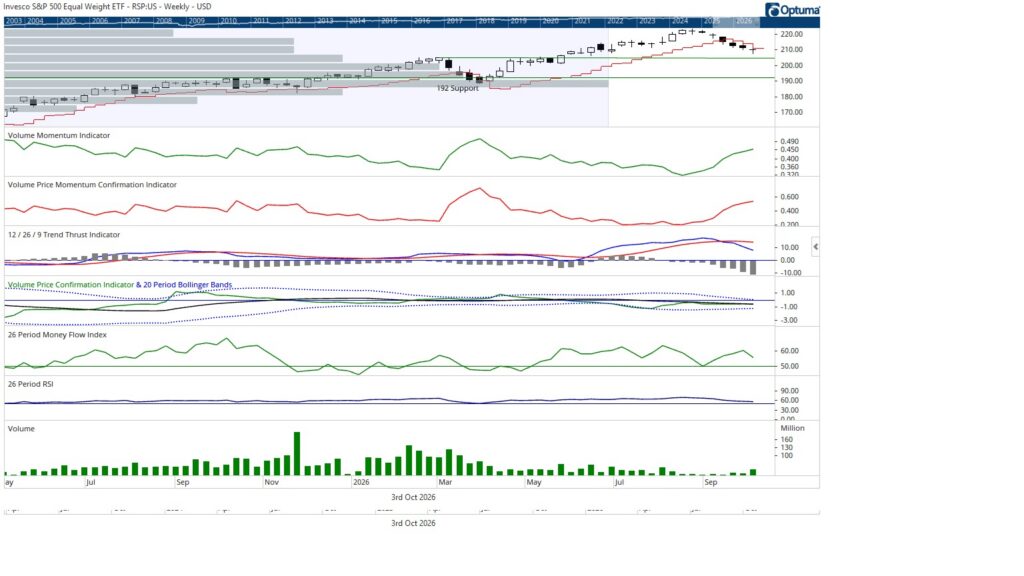
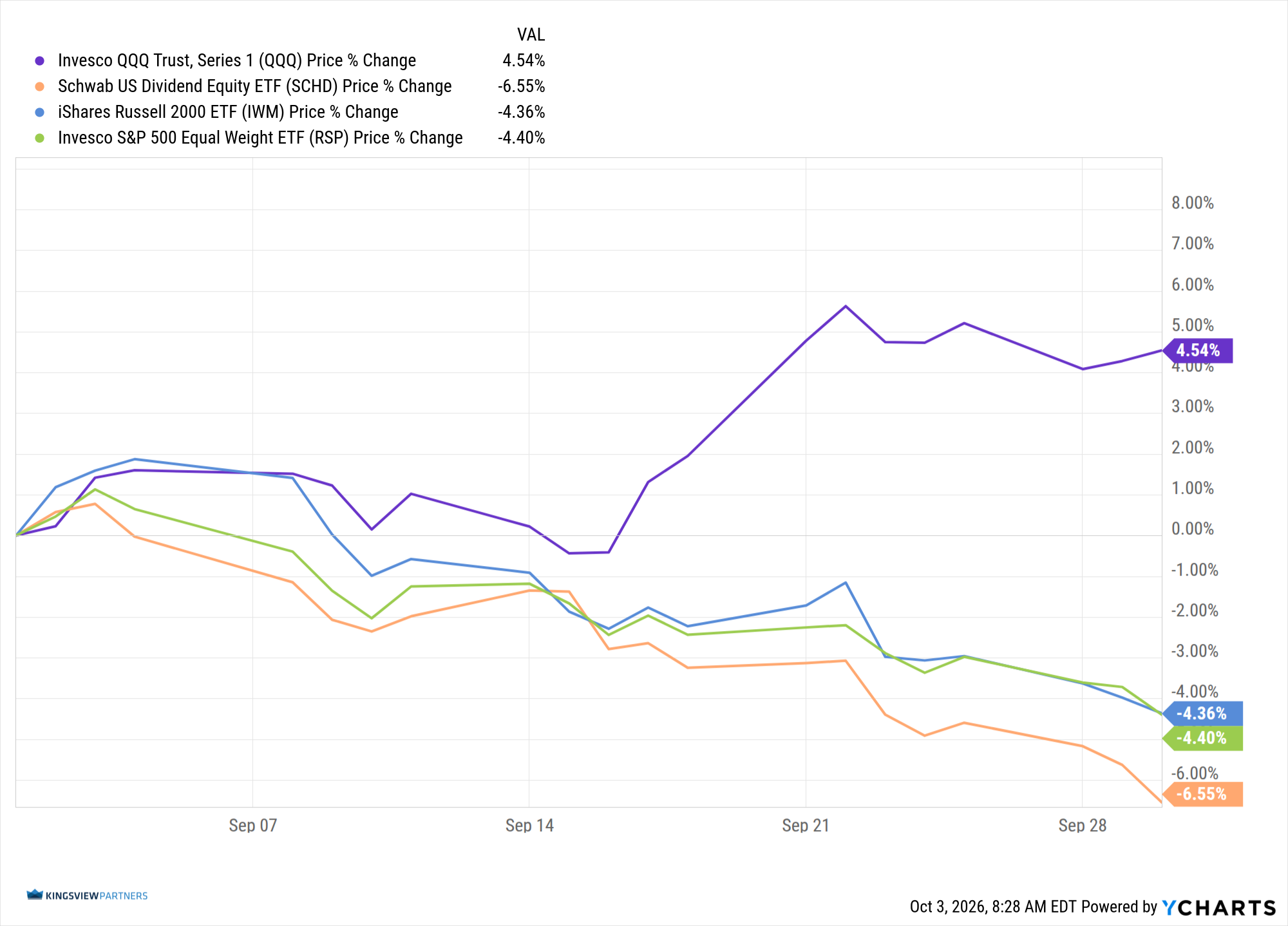
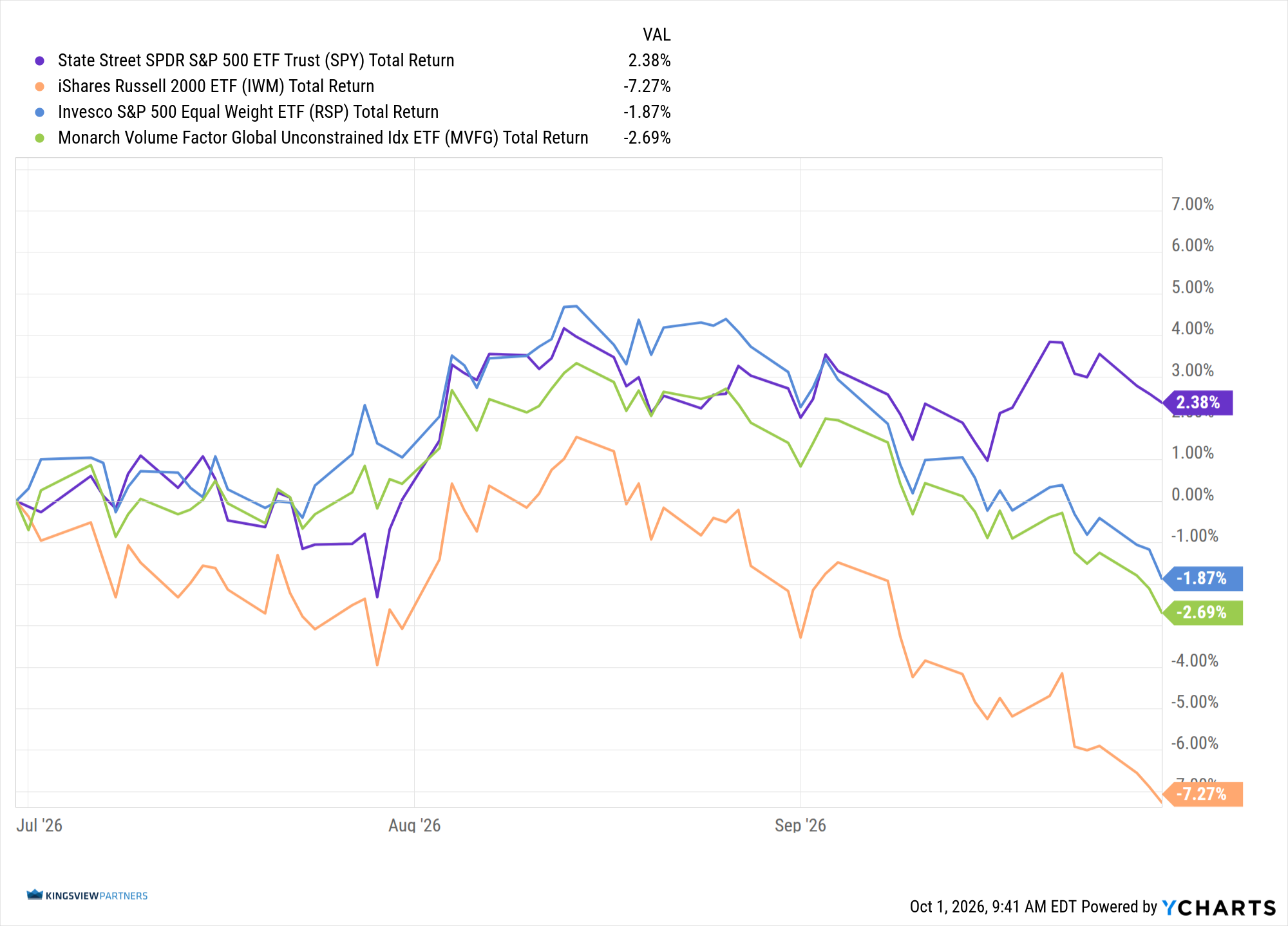
September told a sharper story. The Invesco QQQ Trust Series 1 rallied 4.54%, while the iShares Russell 2000 ETF lost -4.36%, the Invesco S&P 500 Equal Weight ETF lost -4.40%, and the Schwab U.S. Dividend Equity ETF fell -6.55%. In military terms, the generals advanced while the ranks retreated. This is not the broadening profile we prefer to see. It may not be a full battlefield collapse yet but rather the brink of an important decision point.
The lieutenants, represented by the Invesco S&P 500 Equal Weight ETF, declined -0.65% on the week, traded close to 205 support, then rallied back to close near Monday’s open, forming its own doji. This candle of indecision appears on the lower end of its recent range, while the S&P 500’s doji appears near the upper end of its range. In other words, the capital weighted S&P 500 is hesitating near the high ground resistance, while the equal weight lieutenants are hesitating near the trenches of support.
The troops, represented by the iShares Russell 2000 ETF, collapsed through 280 support, kissed major trendline support near 275 on Thursday, then rallied back to close above critical 280 support. This action formed yet another doji. (That’s five now this week!) More specifically, a dragonfly doji that suggests the short-term trend could be ready to change. Overall, the reversal showed the troops still have some fight left. However, the line is now clear. To keep the broadening trade alive, the troops must continue to hold above 280. A break and close beneath 275 could be the nail in the coffin for small caps and, with it, a serious setback for the hopes of a broad, healthy advance.
The dividend brass commanders, represented by the Schwab U.S. Dividend Equity ETF, had awakened in the second and third quarters to lead all major units. However, this week they continued their September slide, falling another -1.48%. Like the lieutenants and troops, the brass commanders reached support near 33 and fell beneath it. But unlike the troops and lieutenants, they could not reclaim that level by the close, though they did bounce from their weekly lows. Next SCHD support resides at 32 and is the more important level.
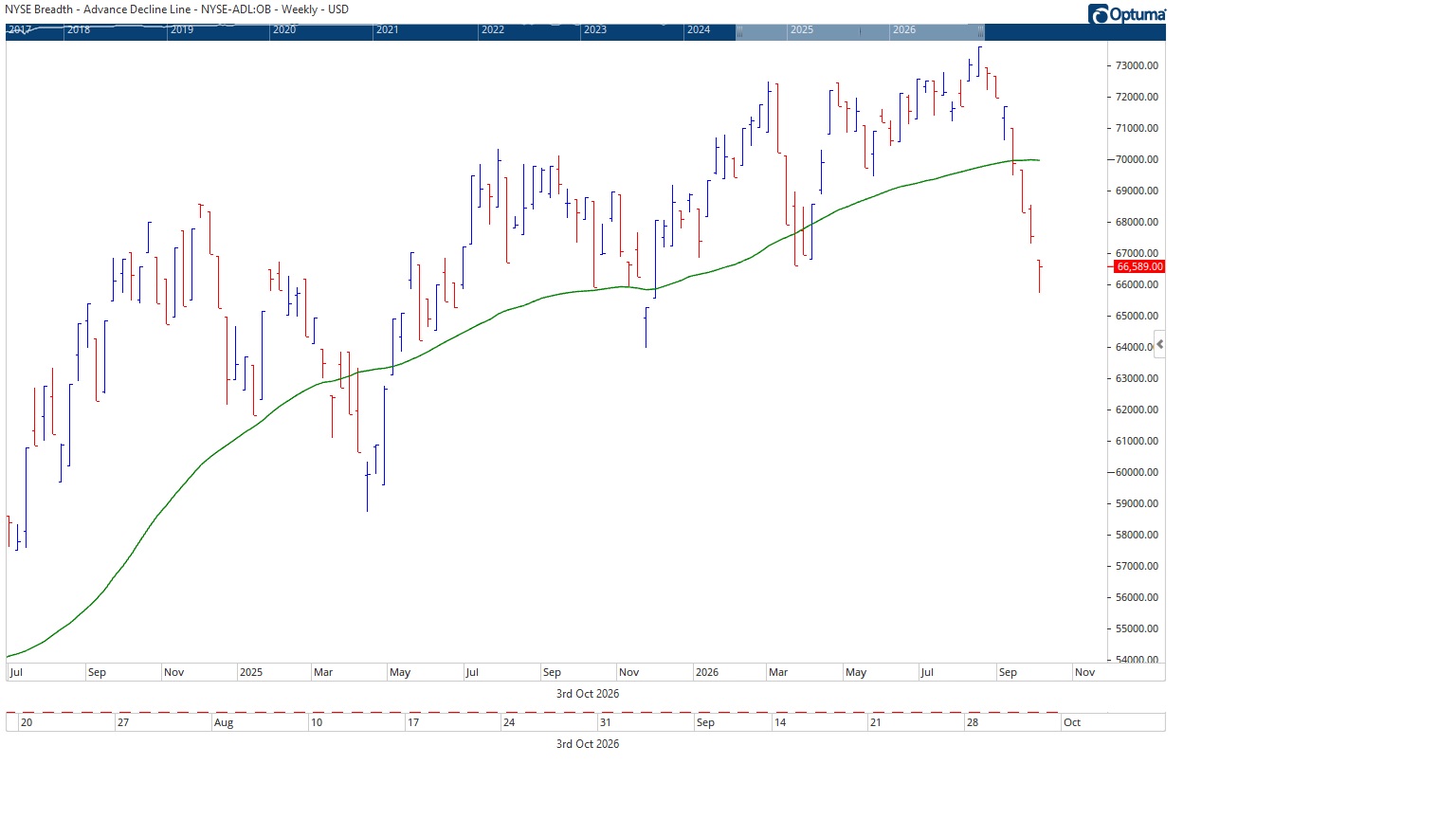
The NYSE Advance Decline Line accentuated the weakness in the broader units. Breadth continued its rapid decline, breaking beneath March’s lows this week. This is the most concerning evidence against the broadening thesis. The Second Half Outlook identified broadening as one of the bright spots of 2026, with the market evolving from And Then There Were None toward And Then There Were Some. That broadening theme is now under direct fire.
This is no longer a young bull market. Mature bull markets require the structure of broad participation, not merely the strength of a few elite generals. In the short run, the bulls’ best tactical outcome may be for the generals to break out and pull the capital weighted S&P 500 Index higher with them. That could extend the advance and improve the headline battlefield report. Longer term, however, the bulls’ most dangerous scenario, and the bears’ best opportunity, would be for the generals to break out, lifting the capital-weighted S&P 500 Index while the troops, lieutenants, brass commanders, and broader market measures break down under support. That would create a widening divergence between the narrow command and the broader army.
The Volume Factor 2nd Half Outlook also warned that the current market is a transition tape, where leadership is rotating, correlations are falling, dispersion is rising, and selectivity matters more than passive exposure. This week fit that description precisely. One portfolio (mega caps) may feel like a bull market, another may feel like a correction (everything else). The generals are pressing new highs, while the troops, lieutenants, and brass commanders are desperately fighting to hold support.
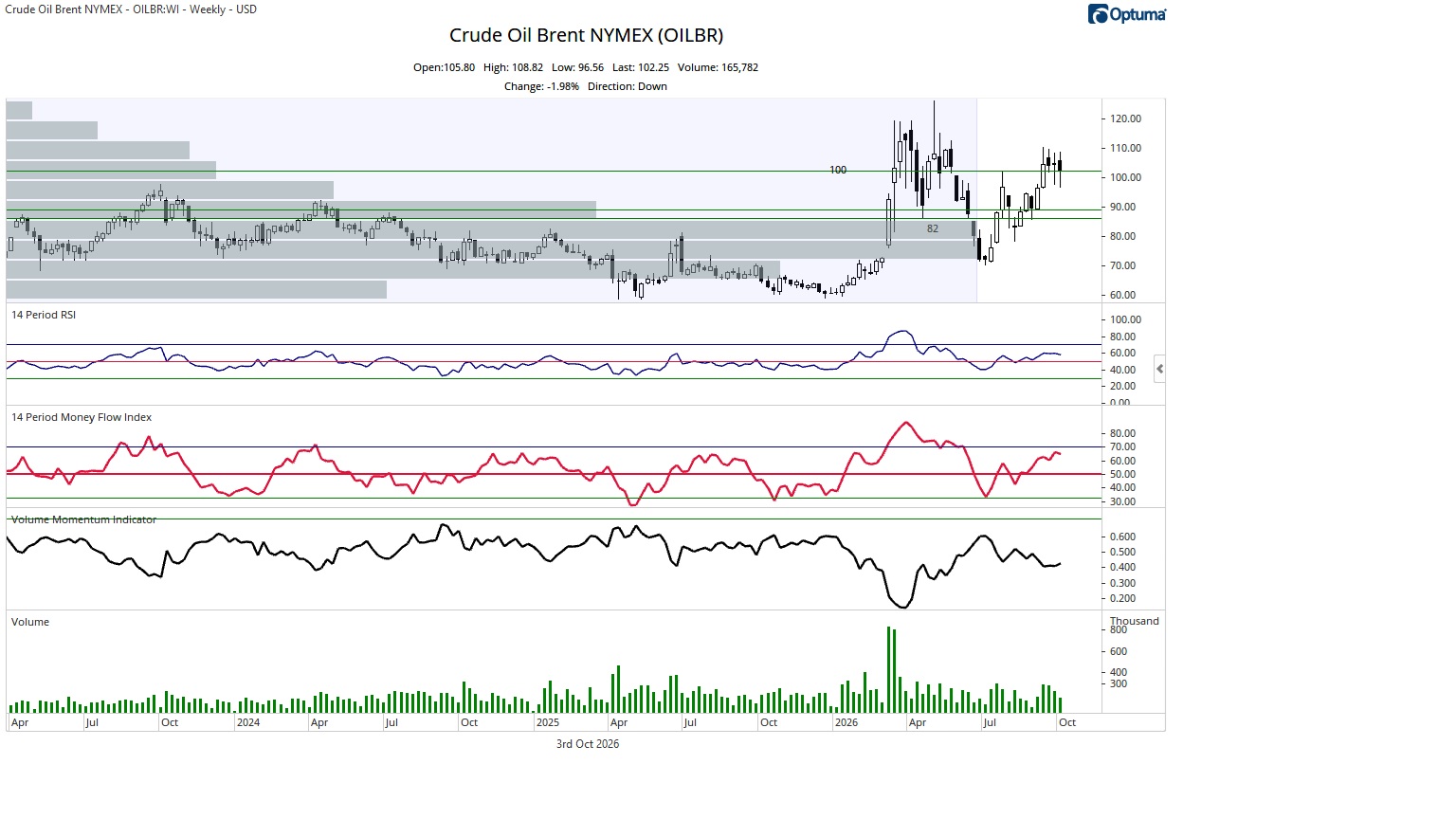
Oil continues to reflect an unresolved war theater. NYMEX Brent crude is still holding near its midpoint while trading in a wide weekly range. The energy front has neither broken down nor is it breaking out. The market appears to be treating the oil front as contained for now, but not resolved. A move appears to be brewing, but the direction is unclear.
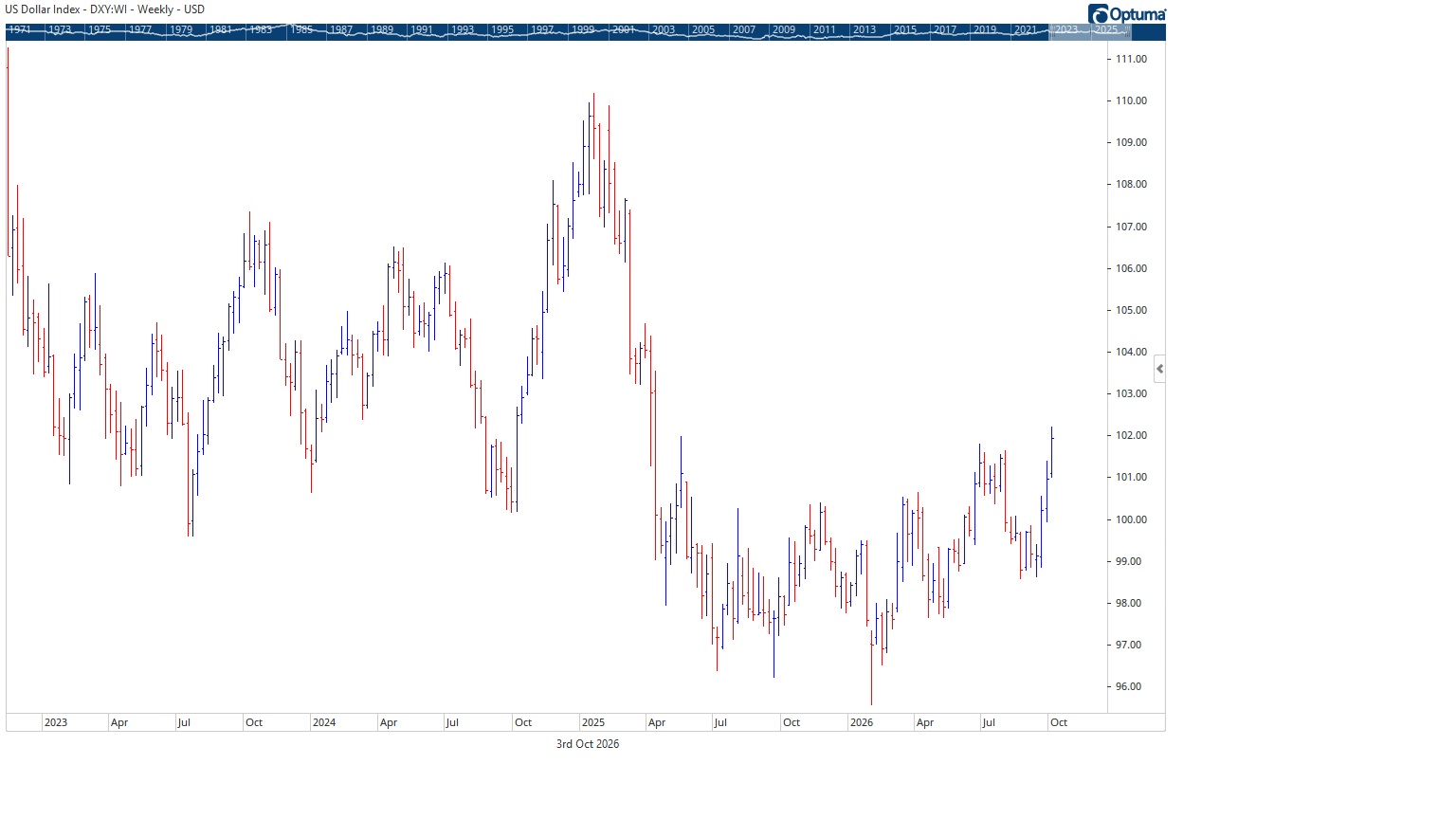
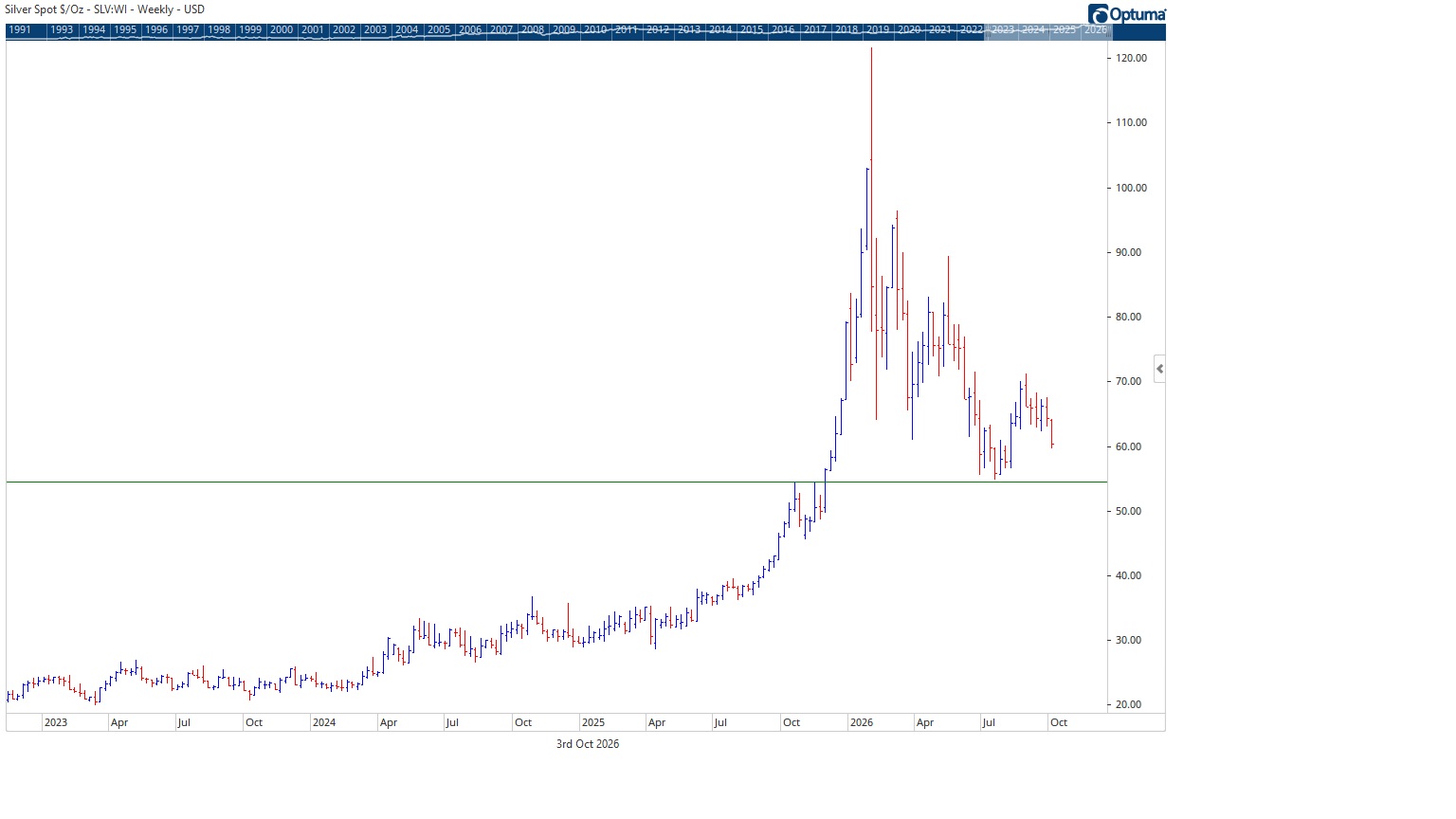
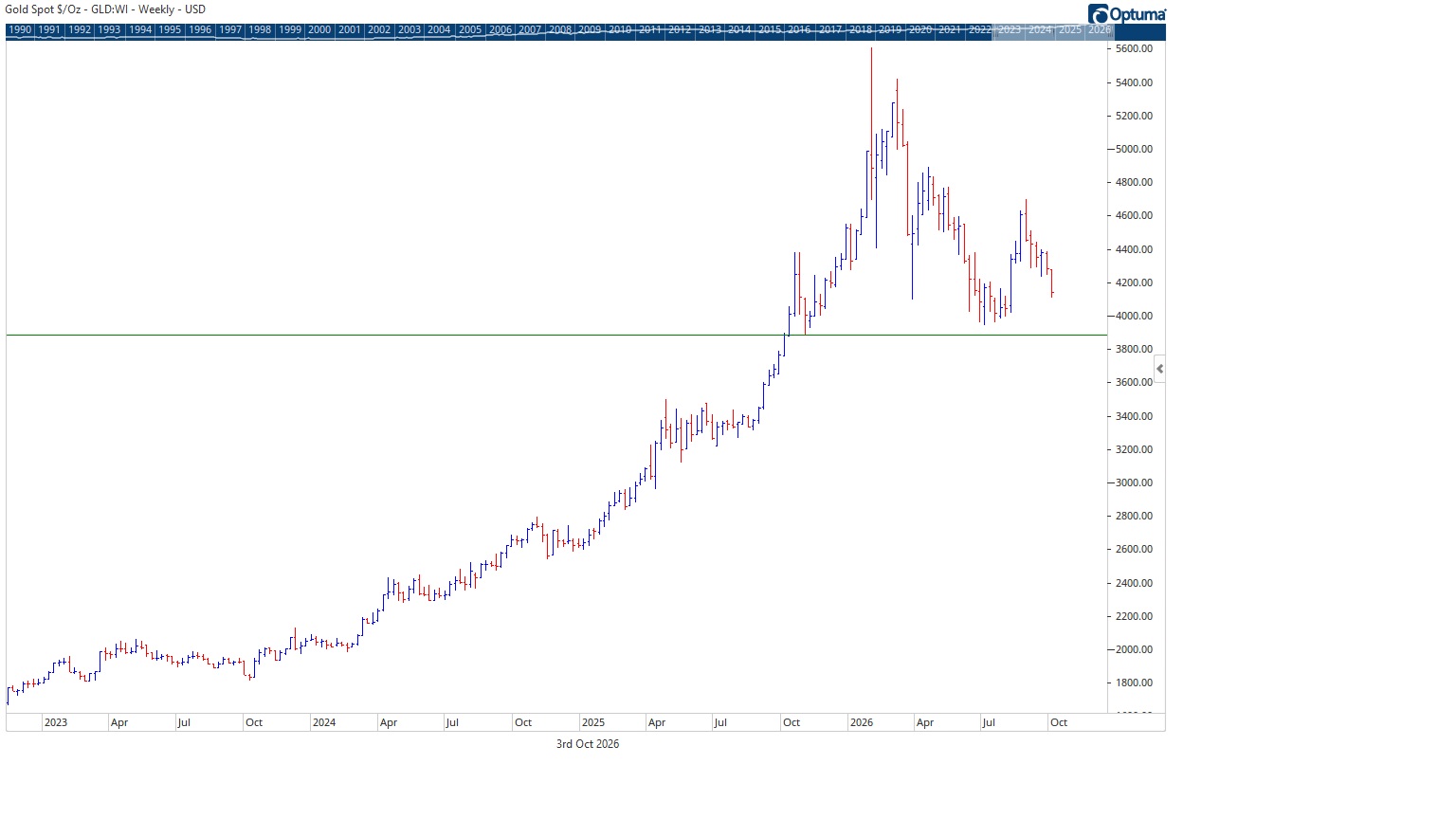
Gold and silver both broke beneath their established ranges. These downward breaks were likely influenced by the recent breakout in the U.S. Dollar Index, which is now pressing higher. Commodities and international equities could come under pressure if the dollar breakout continues.
The week’s major message is indecision. Price hesitated. Capital advanced. The generals pressed higher. The broader ranks retreated. Breadth deteriorated. The dollar broke out. Commodities weakened. The S&P 500 formed a doji near resistance, while the equal-weight market formed a doji near support, as the troops formed a dragonfly doji at critical trendline short.
DOJI know what this means?
It means the market could be pausing at a critical decision point. If the S&P 500 pushes through resistance with continued capital sponsorship, the bulls could reclaim the field. If the broader market units fail, especially with breadth already breaking down, another retest or a narrow divergent market may be in the cards.
Risk Command
Both Capital Weighted Volume and Capital Weighted Dollar Volume continue to make new highs, a major bullish reinforcement. However, the advance is narrowing again toward the generals, while the troops, lieutenants, brass commanders, and breadth have all weakened.
For the bulls, the S&P 500 must hold the 7616 to 7600 support zone if it cannot push through 7800 resistance. The Invesco QQQ Trust Series 1 needs a weekly close above 750 on strong volume to confirm command. The iShares Russell 2000 ETF must hold 280, and especially 275, to keep the troops from falling out of the bullish theater. The Invesco S&P 500 Equal Weight ETF needs to hold near 205. The Schwab U.S. Dividend Equity ETF needs to reclaim 33. The NYSE Advance Decline Line needs to stabilize quickly.
For now, the generals are pressing the advance; the capital supply lines are improving, but the ranks continue to retreat, though they have now pushed back to their vital trench reinforcements. In markets as in war, victory is not declared by one elite division alone. The mission is to defend critical ground, watch the supply lines, and manage risk before it manages you.
BUFF DORMEIER, CMT
Updated: 10/5/2026. Historical references do not assume that any prior market behavior will be duplicated. Past performance does not indicate future results. This material has been prepared by Kingsview Wealth Management, LLC. It is not, and should not, be regarded as investment advice or as a recommendation regarding any particular security or course of action. Opinions expressed herein are current opinions as of the date appearing in this material only. All investments entail risks. There is no guarantee that investment strategies will achieve the desired results under all market conditions and each investor should evaluate their ability to invest for the long term. Investment advisory services offered through Kingsview Wealth Management, LLC (“KWM”), an SEC Registered Investment Adviser.