Volume Analysis | Flash Update – 10.26.26

October began with dojis scattered across the battlefield, on both daily and weekly charts. In our original “Doji Know?” commentary, the generals were hesitating near resistance, while the dividend brass commanders and equal weight lieutenants were testing the foundations of support. Similar candles, very different coordinates. The question posed was whether September’s leadership was ready to approach a change of command.
October’s answer has not been subtle.
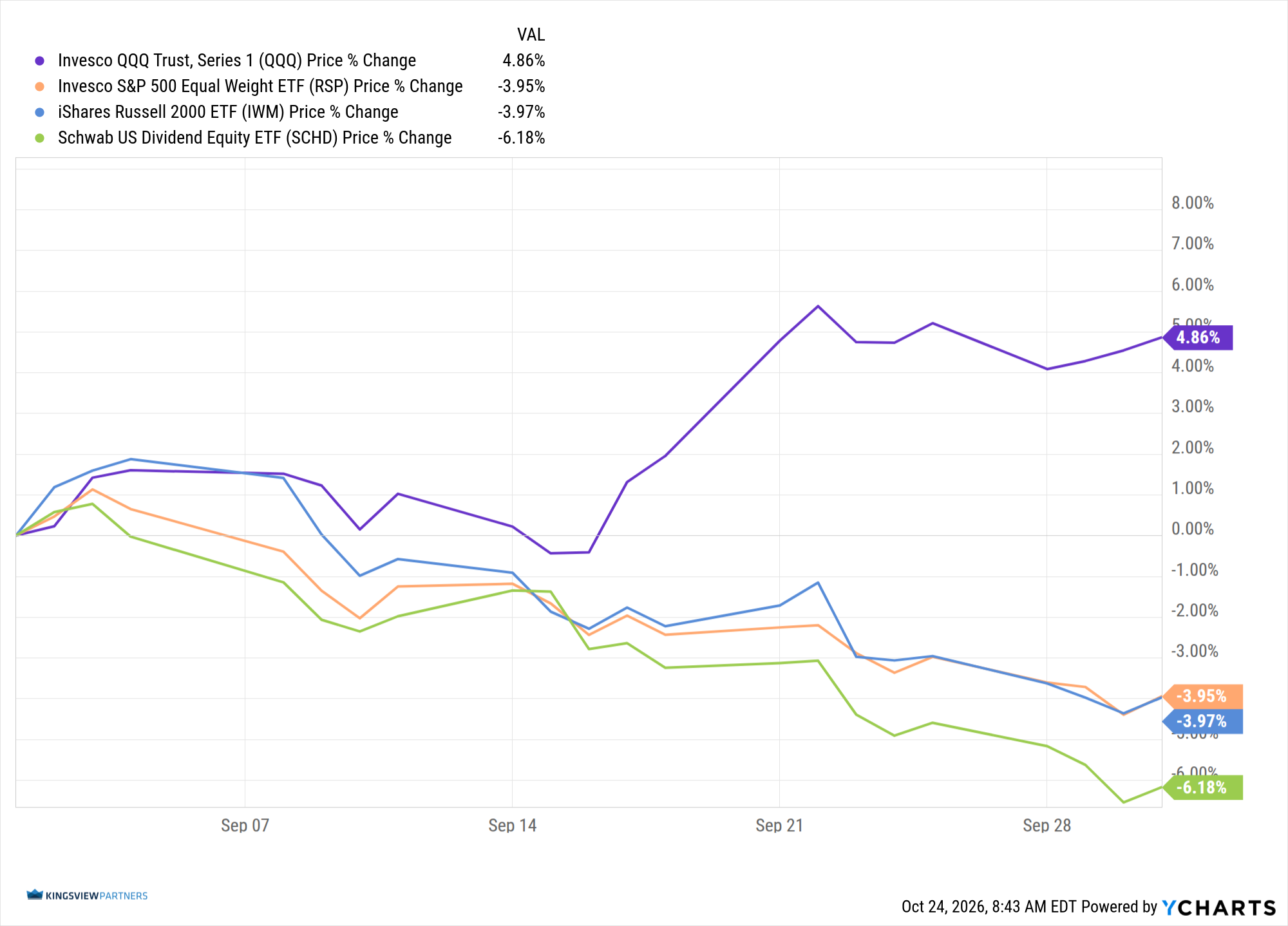
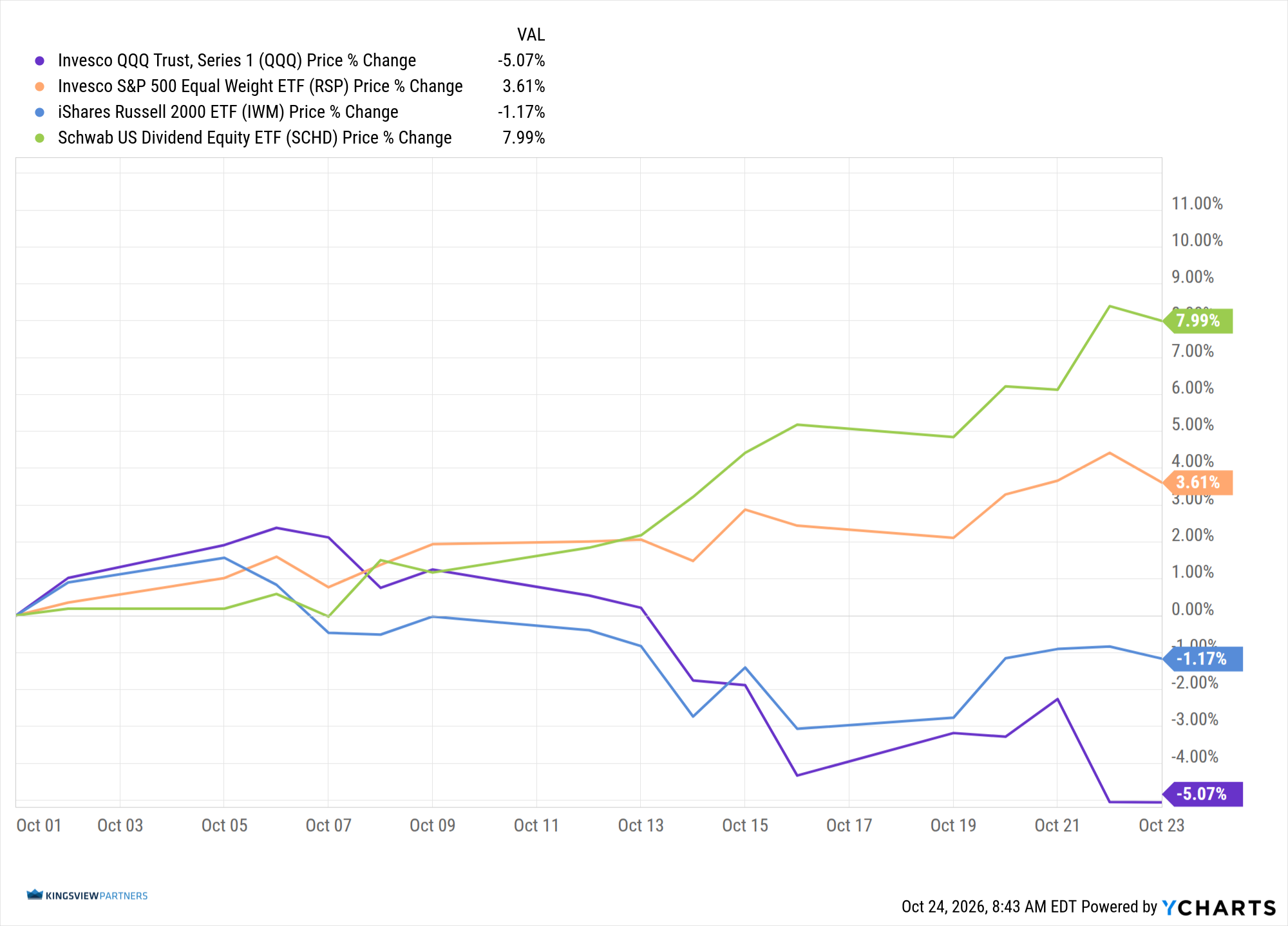
During September, the generals advanced 4.54%, while the equal weight lieutenants surrendered -4.40% and the dividend brass commanders lost -6.55%. Through October 23, those roles have reversed. The lieutenants have gained more than 3.5%, the generals have declined more than -5%, and the brass have advanced nearly 8%. September’s medal recipients are now requesting reinforcements, while the formations previously guarding the rear have moved to the front.
The dojis did not guarantee that reversal. They identified hesitation at important locations, and the subsequent action supplied the evidence. That distinction matters. This is a useful moment to recognize the change of command we were watching, not to confuse a successful field assessment with the end of the campaign.
The old economy has found its marching boots. The new economy’s AI generals are still looking for firmer footing.
The Brass Takes Command
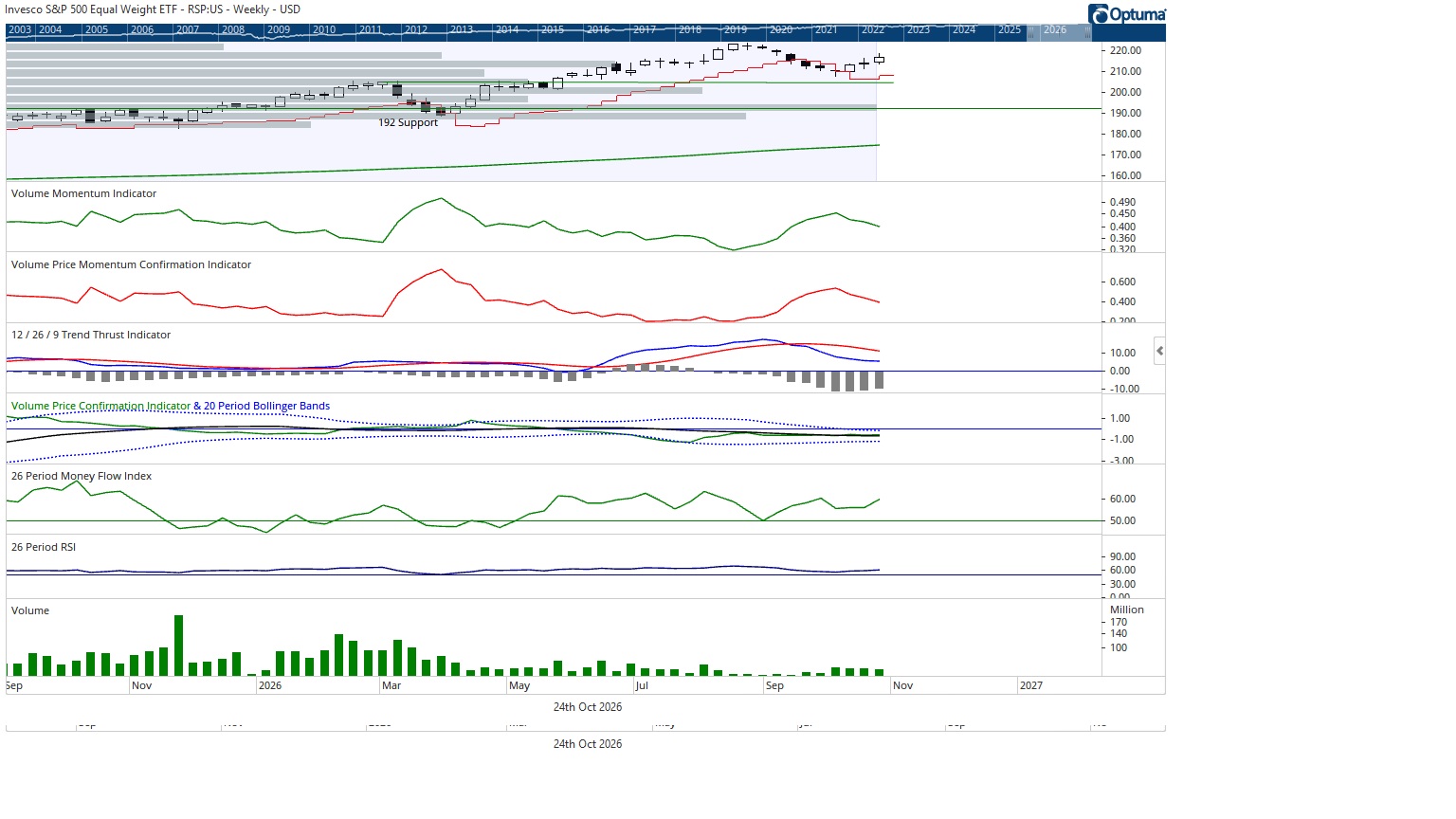
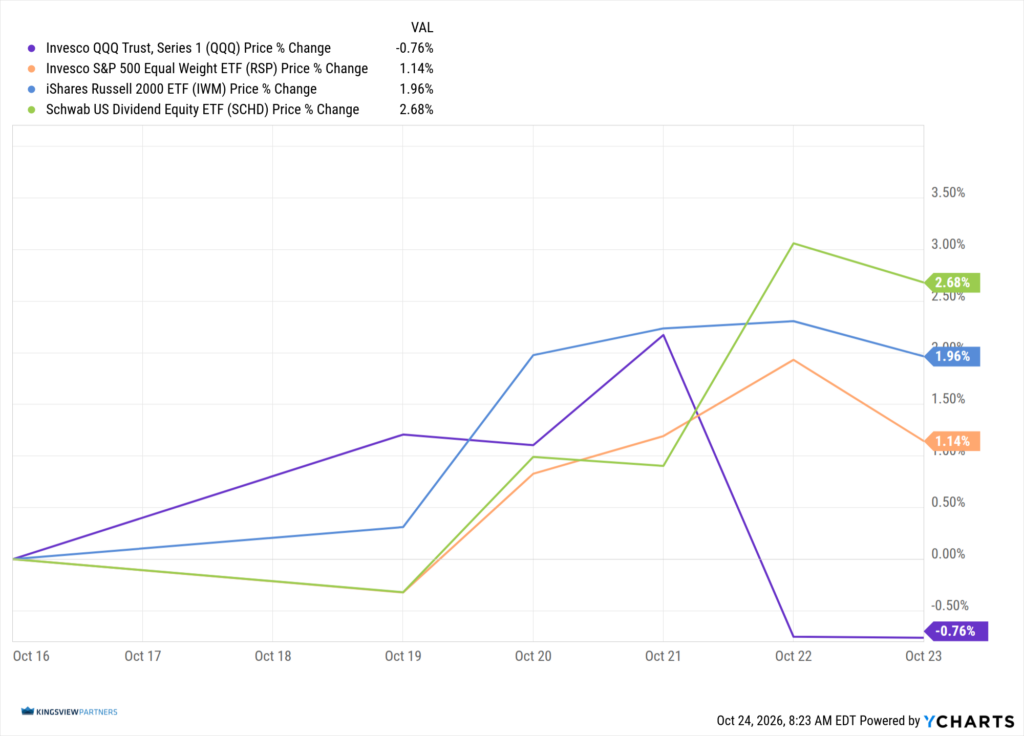
The dividend brass commanders, represented by the Schwab U.S. Dividend Equity ETF, led the field again with a 2.68% weekly advance, closing at new all-time highs. The equal weight lieutenants, represented by the Invesco S&P 500 Equal Weight ETF, gained 1.14% and continued working back toward their former highs. The belly of the market is doing more than absorbing the generals’ retreat. It is beginning to carry more of the campaign.
The troops, represented by the iShares Russell 2000 ETF, rallied 1.96%, providing welcome participation from a unit that had repeatedly struggled to hold formation. However, the entire week remained within the previous week’s range, and the troops remain slightly beneath their broken upward trend, which now acts as resistance. This was a counterattack, not yet a recapture of lost territory. A positive weekly return helps morale, but recovering the trend would do more for the mission.
The generals, represented by the Invesco QQQ Trust, Series 1, declined another -0.76%. They continue to hold near 700, above the important 685 support position. Holding those defenses would give the broader ranks time to strengthen without turning a leadership rotation into a more damaging retreat. The generals do not have to lead every advance, but the bulls would prefer that they stop giving ground while the reinforcements assemble.
The troops remain the important exception to an otherwise encouraging leadership reversal. Their earlier attempt to defend support did not prevent an eventual break of the intermediate uptrend. This week’s rebound improves the immediate picture, but it has not erased that structural damage. The brass and lieutenants have changed direction more convincingly. The troops still need to change their position on the map.
Broadening Is Improving, but the Supply Report Is Mixed
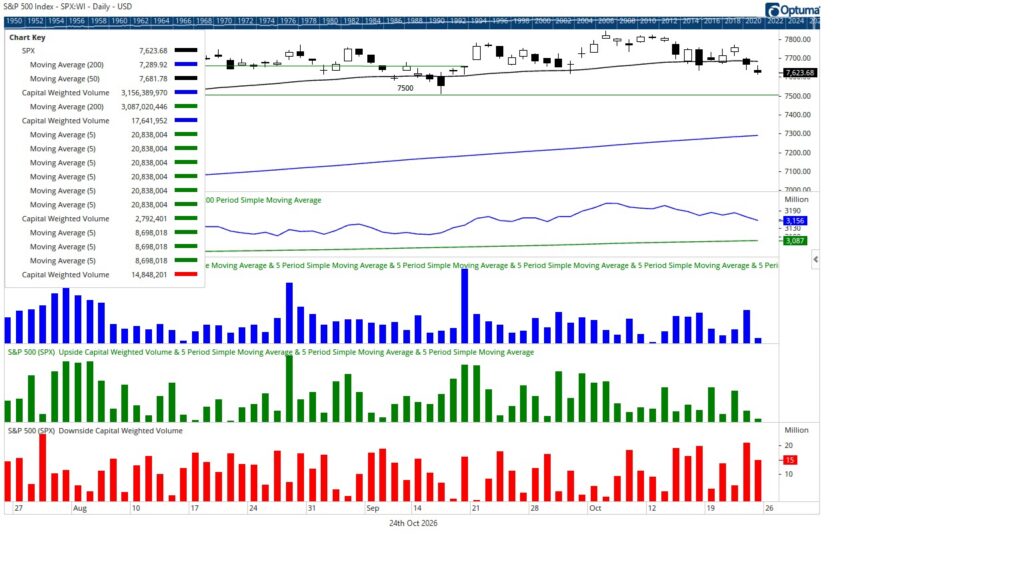
Despite earnings season, total Capital Weighted Volume was light for the week, with approximately 58% directed to the downside. Beneath the stronger performance of several broader regiments, selling pressure remained evident in the capitalization weighted battlefield.
Thursday delivered the highest Capital Weighted Volume of October so far and the largest downside volume day since August, with 77% of volume to the downside. Friday followed with approximately 85% downside volume, but on very low total activity.
Those two sessions should not be treated as equivalent. Thursday combined concentrated selling with meaningful participation. Friday’s downside imbalance was larger, but the force behind it was much smaller. The bears dominated the radio traffic on Friday, but Thursday was when they brought more ammunition.
The S&P 500 finished at 7,623.68, below its 50-day moving average near 7,682. That average remains an immediate position to reclaim, while 7,500 remains an important support line below. Accumulated Capital Weighted Volume has also eased from its recent highs, although it remains well above its rising 200-day average. The supply line has bent, but that longer trend has not yet broken.
This is the central tension. Broader leadership is improving while Capital Weighted Volume still reflects selling pressure. Both observations can be true. A market can rotate away from its largest constituents without every stock retreating, but rotation alone does not establish that overall sponsorship is strengthening.
Price is the market’s testimony. Volume is the polygraph. A more encouraging story from the broader ranks still needs confirmation from the supply report.
Our And Then There Were None framework was never simply a prediction that falling generals would bring down the entire army. It was a way to examine concentration, sponsorship, and the possibility that leadership could migrate elsewhere. The constructive alternative was And Then There Were Some, a market in which more formations could participate rather than leaving the campaign dependent on a few elite names.
That is the distinction emphasized in our Second Half Outlook. A healthier transition does not require the AI trade to disappear. It requires the market to become less dependent on it. The generals can digest prior gains while equal weight equities, dividend companies, and other parts of the broader economy assume more responsibility, provided volume confirms the handoff.
The old economy versus new economy contrast is therefore useful, but it is not a permanent dividing line. Some old economy companies may become beneficiaries of new technology through productivity, efficiency, and wider adoption. The opportunity is not necessarily to abandon innovation. It is to recognize that its benefits, and the market’s leadership, need not remain confined to the original generals.
This week, the NYSE Advance Decline Line finished higher, another encouraging report from the broader field. However, it remained within the range established at the beginning of October. Breadth has improved, but it has not yet delivered a decisive breakout from that containment.
The market’s core is strengthening. Its coordination still needs work.
The Commodity Scouts Take Different Routes
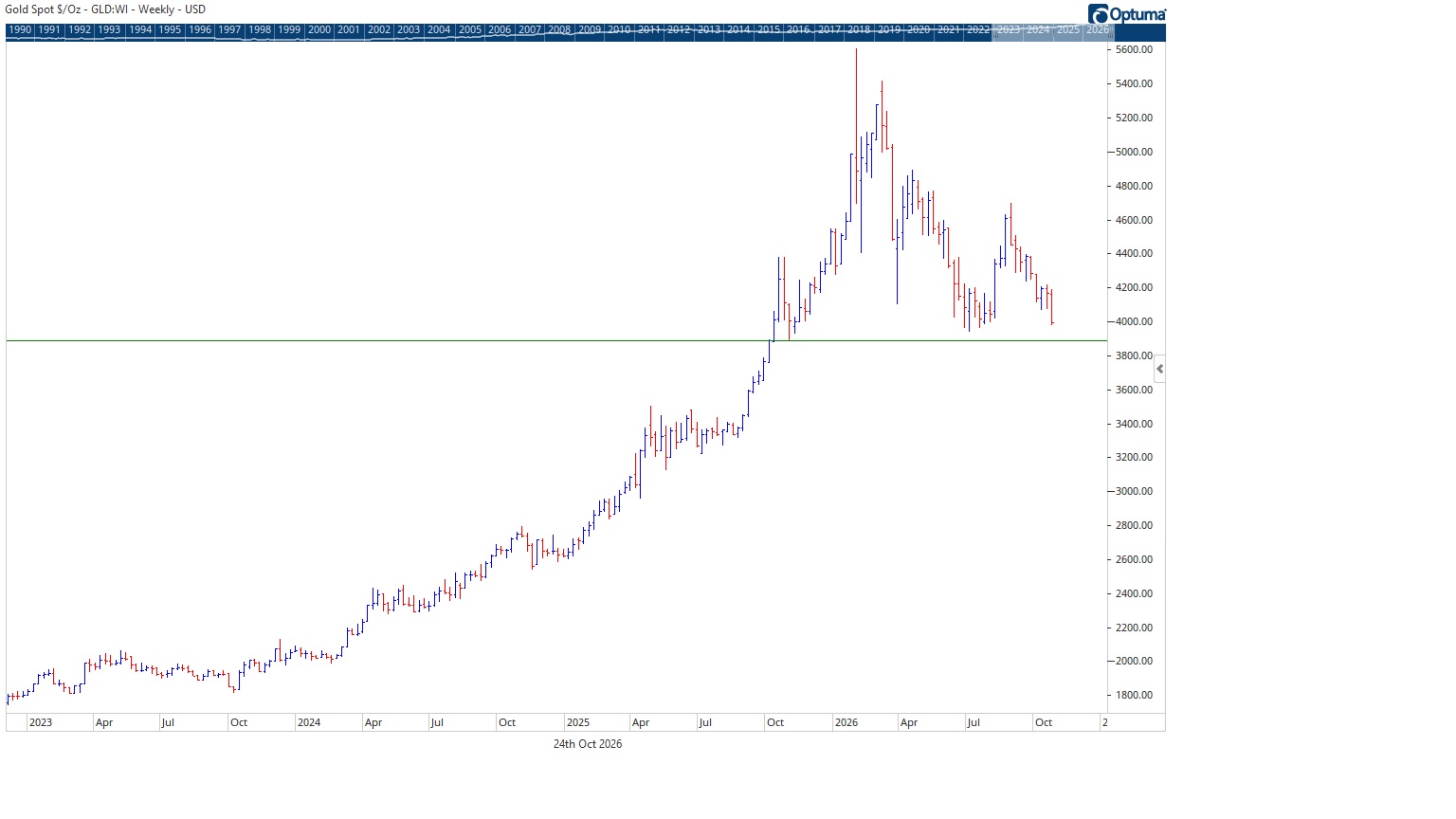
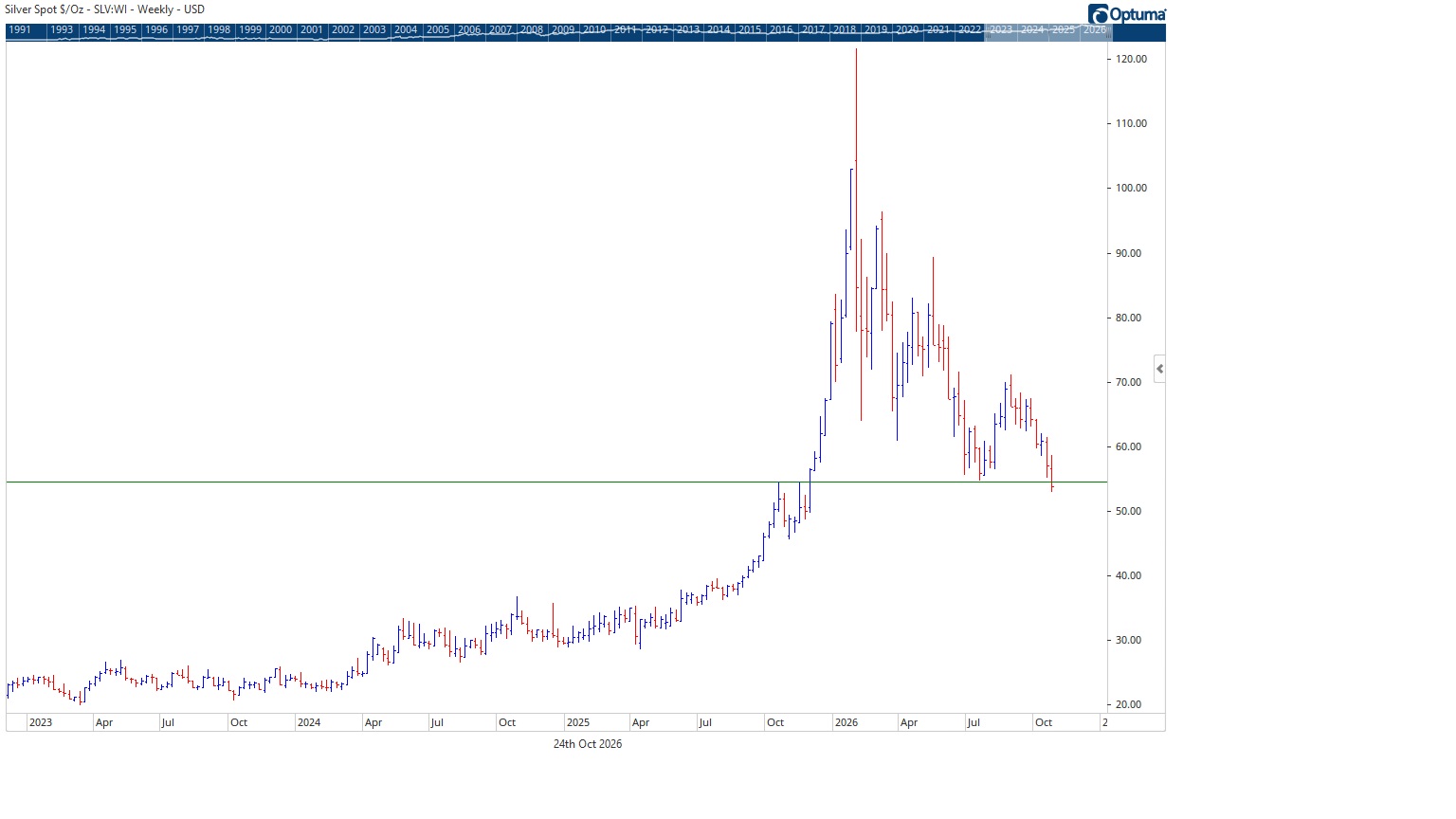
Gold moved toward the $4,000 support area, while silver slipped slightly beneath its important $55 support level. These are meaningful defensive checkpoints. Gold needs to demonstrate that buyers will defend its nearby foundation, while silver would improve its position by reclaiming the ground it just surrendered.
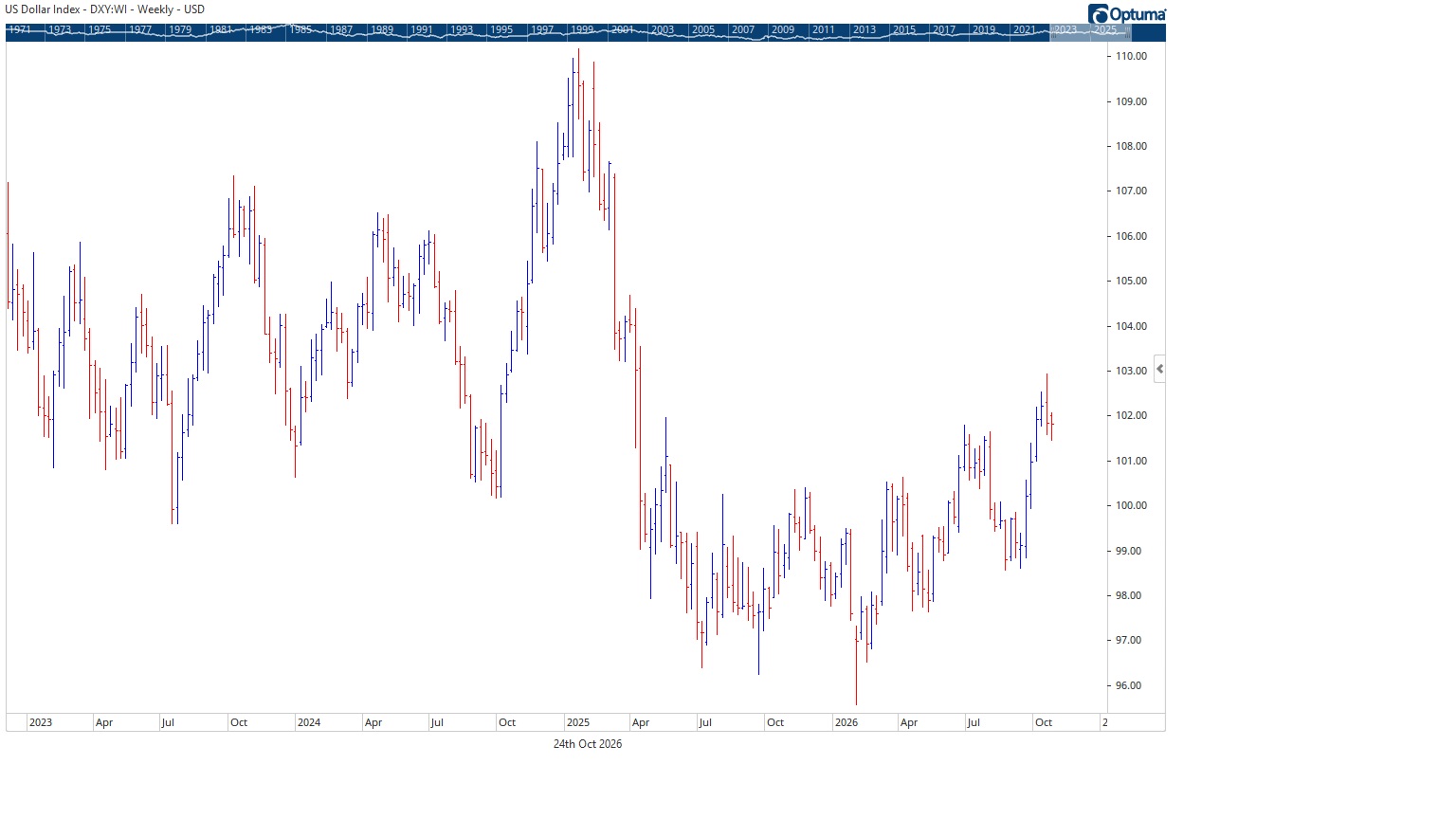
The U.S. Dollar Index moderated its earlier gains, yet that relief did not produce a convincing recovery in the precious metals. Their own price structures therefore remain the more important field reports to monitor.
Oil took a different route. Brent crude broke above the $110 resistance area and moved toward its next obstacle near $120. The energy scouts have cleared one checkpoint, but they have not reached open terrain. Whether that breakout holds will matter more than the initial crossing.
Risk Command
October has provided a useful validation of the leadership shift highlighted by the original doji discussion. The generals have weakened, the lieutenants have recovered, and the dividend brass commanders have stepped forward. That deserves recognition. It does not justify standing down the risk patrol.
This is a mature bull market, not a fresh campaign that can be judged solely by the speed of its leading division. In our framework, the healthier outcome is a stronger core supported by wider participation and improving capital sponsorship. A brief change in the performance rankings is encouraging. A durable change in market structure requires more.
The next assignments are clear. The generals need to defend the 700 and 685 areas. The troops need to recover their broken trend rather than merely rally beneath it. The lieutenants and brass need to preserve their renewed strength, while the NYSE Advance Decline Line needs to extend its recovery. Most importantly, Capital Weighted Volume and Capital Weighted Dollar Volume must provide evidence that the handoff is being replenished, not merely financed by continued selling elsewhere.
Risk management remains the cornerstone, even when an earlier assessment has worked well. Position sizing, diversification, concentration awareness, and established support levels deserve more attention than a victory parade. Our process remains to follow the evidence and adjust when it changes, not to defend a favored narrative because the last chapter read well.
Doji know? October has offered an answer. The change of command is visible, but the durability of the new formation remains under review. We can acknowledge the successful handoff without declaring mission accomplished. Respect the stronger core, watch the supply lines, and manage risk before it manages you.
Grace and peace,
BUFF DORMEIER, CMT


Updated: 10/26/2026. Historical references do not assume that any prior market behavior will be duplicated. Past performance does not indicate future results. This material has been prepared by Kingsview Wealth Management, LLC. It is not, and should not, be regarded as investment advice or as a recommendation regarding any particular security or course of action. Opinions expressed herein are current opinions as of the date appearing in this material only. All investments entail risks. There is no guarantee that investment strategies will achieve the desired results under all market conditions and each investor should evaluate their ability to invest for the long term. Investment advisory services offered through Kingsview Wealth Management, LLC (“KWM”), an SEC Registered Investment Adviser.