Should You Convert to Roth Before RMDs? Here’s the Window Most People Miss
Executive Summary
Roth conversions can be a powerful tool for reducing taxes in retirement, but only if you use them at the right time. For many retirees, the most tax-efficient moment to convert happens during a narrow window between retiring and taking Required Minimum Distributions (RMDs). Keith Demetriades, CFP®, CKA®, explains the logic behind conversions, how to identify that window, and what the consequences can be if you miss it.
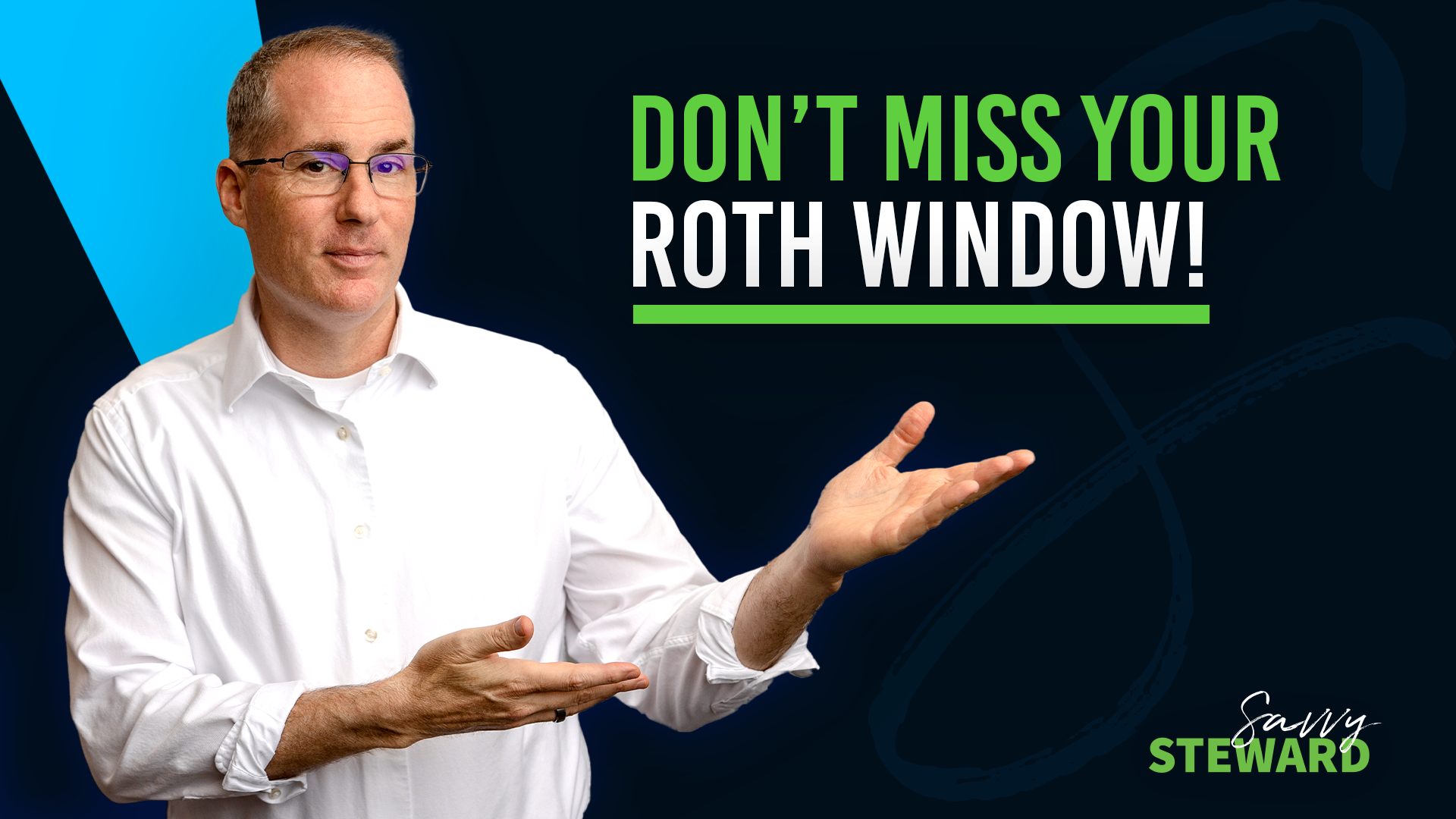
Want to watch an in-depth exploration of this topic?
Check out this video on my YouTube channel, @SavvySteward: Should You Convert to Roth Before RMDs? Here’s the Window Most People Miss
Take the free “How Much Do I Need To Retire” Quiz here:
https://secure.kingsview.com/keith-savvy-steward-quiz-youtube#q1
Should You Convert to Roth Before RMDs? Here’s the Window Most People Miss
You’ve probably heard that Roth conversions can lower your lifetime tax burden, but knowing when to do one is just as important as knowing how. Most people assume they’ll deal with this decision in their 70s, but by then, they may have already missed their best opportunity.
There’s a stretch of time in early retirement that offers one of the most favorable tax planning windows you’ll ever get. The key is recognizing it early enough to use it.
When is the best time to do a Roth conversion?
For most people, the ideal Roth conversion window opens after they stop working but before they reach age 73 when Required Minimum Distributions begin. That typically puts the window somewhere in your early to mid-60s.
This window can be easy to miss because it doesn’t come with a formal deadline or notification. Nothing forces you to act, but the conditions during that time often make it the most strategic point to begin shifting pre-tax retirement assets into a Roth account.
What makes the early retirement window so effective for conversions?
During your working years, your income is mostly fixed. Once RMDs begin, your taxable income is forced higher by required withdrawals. But in the years between those two phases, you have something rare: control.
When you retire, your earned income typically drops. If you’re also delaying Social Security, you may have very little taxable income during those years. That creates a window where you can intentionally realize income via Roth conversions at relatively low tax rates.
And because of the SECURE Act, RMDs now begin at age 73, giving you more time to use this strategy than in the past. But it’s up to you to recognize the opportunity. It won’t raise its hand or announce itself. You have to plan ahead and run the numbers.
How do you decide how much to convert each year?
This is where many people hesitate, because voluntarily triggering taxes doesn’t feel intuitive.
But if you understand the brackets, Roth conversions become a proactive planning tool, not a penalty.
One practical approach is to look at your current tax bracket and estimate how much room you have before moving into the next one. For example, in 2024, the 12% bracket for married couples filing jointly goes up to around $94,000 of taxable income. If your income is sitting at $70,000, you might have room to convert $20,000 to $25,000 without jumping into the next bracket.
That doesn’t mean you should always go right up to the line. The right amount depends on your other income sources, spending needs, and long-term goals. But having a structure helps you make more informed decisions.
Can small, consistent conversions still make a difference?
Absolutely. Not every strategy needs to be aggressive to be effective.
Some of the most successful Roth conversion approaches involve moving modest amounts year after year. Converting just $10,000 or $20,000 annually may not feel significant in the moment, but over time, it adds up, reducing the size of your traditional IRA and giving you more tax-free flexibility later.
Small conversions can also help you test how the strategy fits your cash flow and tax picture without overcommitting in any one year. Since Roth conversions are permanent, the ability to scale in gradually can be an advantage.
What happens if you wait too long and miss the window?
Once you turn 73, the IRS requires you to begin taking distributions from traditional retirement accounts. Those RMDs count as ordinary taxable income, whether you need the money or not.
At that point, Roth conversions are harder to execute efficiently. Any amount you convert stacks on top of your existing income, which could push you into a higher tax bracket. It can also affect Medicare premiums and the taxation of your Social Security benefits.
By then, your ability to control your tax picture narrows. Many clients who reach that stage say the same thing: “I wish I had started this five years ago.” The opportunity was there, but without a plan, it passed by.
Taking action in your 60s doesn’t require a full-scale strategy all at once. But running the numbers, identifying your conversion window, and making good decisions now can prevent bigger problems later.
Remember: the goal isn’t to avoid taxes. It’s to pay them at a rate that works in your favor.
Be a savvy steward. Make your life count.
Contact Information
Keith Demetriades, CFP®, CKA®, helps individuals, families, and organizations integrate faith-based principles into their financial planning. Oikonomia is a foundational concept in his practice, reflecting his commitment to stewardship, purpose, and making your life count.
For more information, contact Keith at (806) 223-1105 or visit https://www.kingsview.com/advisor/keith-demetriades/.
Disclaimer: The information provided in this blog is for educational purposes only and should not be considered financial advice. Please consult a qualified financial advisor to discuss your specific situation and needs. Past performance does not indicate future results, and all investments carry risks, including potential loss of principal. Any financial product or strategy references are purely illustrative and should not be construed as endorsements or recommendations.