
The Job Your 401(k) Was Never Supposed to Do
Executive Summary
The 401(k) was created in 1978 as a tax provision, not as a retirement system. Keith Demetriades explains how the 401(k) replaced pensions without ever being redesigned for that purpose, why target date funds only account for one variable—your retirement year—and the specific structural limitations in old employer plans that can cost you options once you stop working.
See an in-depth exploration of this topic here:
Discover a Smarter Way to Manage Market Risk: https://go.kingsview.com/learn
The Job Your 401(k) Was Never Supposed to Do
In 1978, Congress added a small provision to the tax code called Section 401(k). It was just over one page long, and it wasn’t aimed at helping everyday Americans save for retirement.
Ted Benna, the benefits consultant now known as the father of the 401(k), read it, recognized its potential, and figured out how to apply it as an employee retirement savings vehicle—something nobody had done before, and an application Congress hadn’t actually intended.
Once Benna’s model took hold, companies quickly realized they had something far more useful than a tax provision. Within a generation, pensions were all but gone, and the 401(k) was the American retirement system.
The problem is, nobody redesigned it for that job.
How did the 401(k) become the American retirement system?
The 401(k) is a good idea. A genuinely good one.
The tax advantages are real: you reduce your taxable income while you’re earning, and the money grows tax deferred. The employer match is free money, full stop. And for many people, the automatic payroll deduction is the number one reason they save consistently. Without it, they’d spend what they intended to invest.
The 401(k) deserves credit. It got a lot of people saving for retirement who might not have otherwise.
But the 401(k) was never built to replace a pension. It was built to grow your money while you were working. What you do with it once you stop—how you draw it, how you protect it, how you make it last—that was never part of the design.
What do target date funds actually know about you?
Most 401(k)s are invested through target date funds. The industry figured out long ago that most participants weren’t making active investment decisions inside their plans, so they built a solution: one fund, automatically allocated based on a single piece of information: the year you plan to retire.
According to a 2024 report from the U.S. Government Accountability Office, 84 percent of 401(k) plans now offer target date funds, and a majority of participants invest solely or primarily in them.
For what it is, a target date fund is a reasonable tool. It’s diversified, the fees are relatively low, and it adjusts automatically as you approach retirement. For someone who isn’t closely managing their investments, it beats leaving everything sitting in a money market fund going nowhere.
But here’s what a target date fund actually knows about you: your retirement year. That’s the only variable it accounts for.
It doesn’t know your tax situation or what other assets you have. It doesn’t know whether you plan to work part-time, what your Social Security strategy looks like, or what you actually need your retirement savings to do once you stop working. FINRA describes target date funds as a “set it and forget it” mechanism, and that’s a fair description. They do the allocation work automatically. What they don’t do is account for your personal situation, your broader portfolio, or your income needs in retirement.
That’s the design. Set it, forget it, let it grow. The 401(k) has done exactly what it was built to do. The question nobody thought to ask is whether that was ever going to be enough for what retirement actually requires.
What are the structural limitations of leaving money in an old employer’s 401(k)?
The gap between accumulating money and knowing what to do with it in retirement is where most of the real risk lives. While you’re working, that gap doesn’t cost you much. But retirement has a way of arriving before anyone has thought through what comes next.
When the money is still sitting in an old employer’s plan, that gap comes with some specific limitations worth understanding.
The investment menu is fixed. Whatever funds the company negotiated when they set up the plan is what’s available, and there’s no flexibility to adjust that based on what your retirement actually requires or what’s happening in the markets.
The beneficiary rules can be more restrictive than most people realize. If passing assets efficiently to a spouse, children, or a trust matters to you, where that money sits when you die matters too. Employer plans were designed around your employment relationship with the company. Your estate plan was never part of the equation.
Required Minimum Distributions are generally less flexible in an employer plan than in other structures. At 73, the IRS requires you to start taking money out, whether you need it or not, and each plan must satisfy its own RMD independently. There’s no ability to look across your accounts and pull from wherever makes the most strategic sense.
Those limitations are built into the plan. But ultimately, the most significant issue isn’t structural—it’s that nobody is actively managing that money for the retirement you’re living.
Why does it matter where your retirement money sits?
Even if you have a financial advisor, you may not have addressed the 401(k) issue specifically. If you have money sitting in an old employer’s plan, the investment limitations, the RMD structure, and what that means for the rest of your portfolio are worth examining.
The right path depends on your situation: where you are, what you have, and what you need those funds to do. But getting it into the right structure, with the right strategy behind it, is how you make sure your money is working for the life you’re actually living. And the sooner you have a strategy in place, the more options you have.
What does it look like when your 401(k) is actually built for retirement?
When your 401(k) is actually built for retirement—when the structure matches the life you’re living, not the job you left—a few things become true.
You wake up knowing your income is mapped.
Your investments fit your life.
Your RMDs are coordinated.
Your beneficiaries are squared away.
A market shift doesn’t set your mood.
A plan rule doesn’t box in your taxes.
And the savings you spent decades building are finally doing the job they were meant to do—funding the life you’re living, not the plan you left behind.
That’s the difference between having money and having a retirement plan.
The 401(k) was built to grow your money while you were working, and it does that job well. The tax advantages are real, the match is real, and the automatic savings discipline is real.
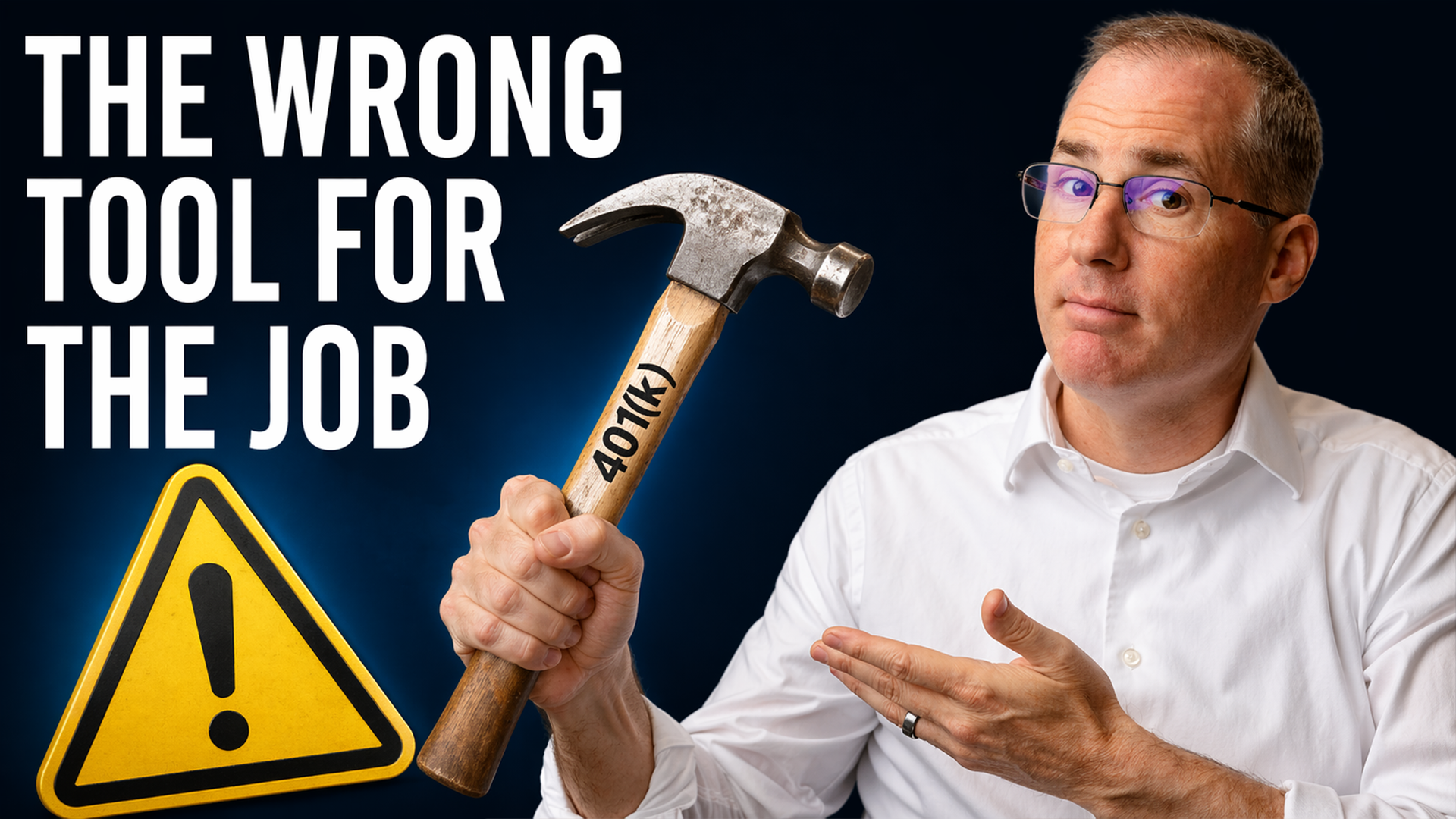
What it was never built to do is replace a pension, manage your distributions in retirement, or answer the questions that matter once the paycheck stops. That’s not a flaw in the tool. It’s a mismatch between the tool and the job.
For many people with money still sitting in an old employer’s plan, those limitations are worth understanding before they become a problem.
Real Wealth Starts With Real Life.
Contact Information
Keith Demetriades, CFP®, CKA®, believes real wealth starts with real life. He created the 4D Client Experience to help guide decision-making and ensure your money works as a tool to support your life. If you’re ready for a financial plan that reflects how you live and what you’re building toward, contact Keith at (806) 223-1105 or visit Kingsview Partners.
Disclaimer
The information provided in this blog is for educational purposes only and should not be considered financial advice. Please consult a qualified financial advisor to discuss your specific situation and needs. Past performance does not indicate future results, and all investments carry risks, including potential loss of principal. Any financial product or strategy references are purely illustrative and should not be construed as endorsements or recommendations.
Investment advisory services are offered through Kingsview Wealth Management, LLC (“KWM”), a SEC Registered Investment Adviser. Insurance products and services are offered and sold through Kingsview Insurance Services, LLC (“KIS”), by individually licensed and appointed insurance agents. KWM and KIS are subsidiaries of Kingsview Partners.