
The “Average” Retirement Number Doesn’t Measure What You Think
Executive Summary
Every year, Northwestern Mutual asks Americans how much they think they need to retire, and the number fluctuates with market conditions and headlines. Keith Demetriades explains why the most talked-about retirement number measures public sentiment rather than actual costs, what the Bureau of Labor Statistics data reveals about the real trajectory of retirement expenses over the past 36 years, and why building a plan that keeps pace with the Retirement Climb matters more than chasing any single target number.
See an in-depth exploration of this topic here:
Discover a Smarter Way to Manage Market Risk: https://go.kingsview.com/learn
The “Average” Retirement Number Doesn’t Measure What You Think
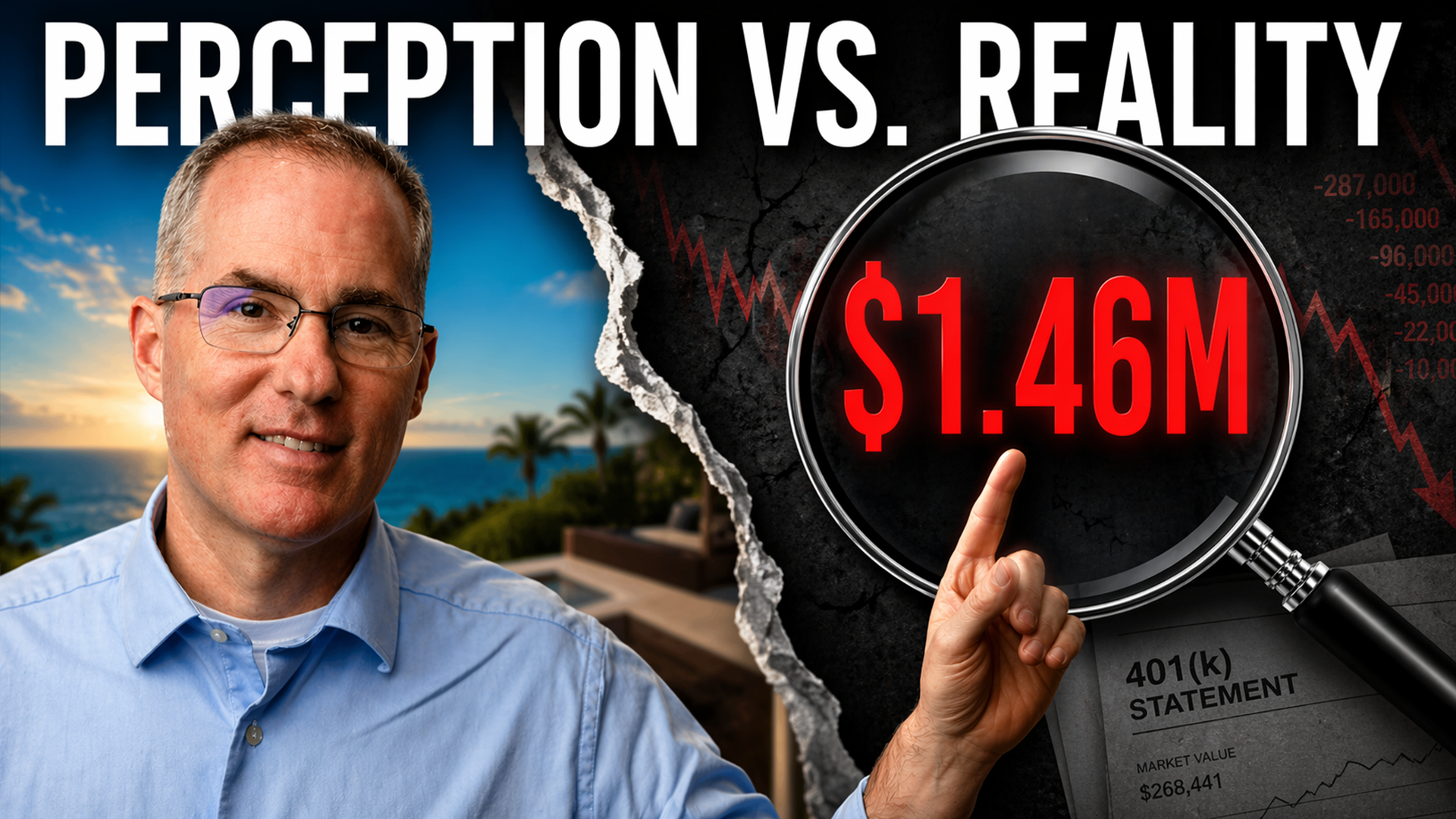
Every year, Northwestern Mutual asks thousands of Americans the same question: how much do you think you need to retire comfortably? Last year, the answer was $1.26 million. This year it’s $1.46 million. That’s a $200,000 jump in twelve months.
If you’ve already accumulated more than $1.46 million, you might be tempted to dismiss this data entirely. But this isn’t really about that number.
Look at the progression over the last five years:
2022: $1.25 million.
2023: $1.27 million.
2024: $1.46 million.
2025: $1.26 million.
2026: $1.46 million.
The number jumped in 2024, pulled back in 2025, then shot right back up in 2026. That volatility tells you something important about what this data actually measures.
1. Why does the “average retirement number” fluctuate so much year to year?
In 2024, inflation was running hot, and people were anxious. The number jumped. In 2025, inflation cooled, people relaxed, and the number dropped. Now inflation is persistent, Social Security uncertainty is back in the headlines, and the number is back up.
The survey measures exactly what it’s designed to measure: public sentiment.
But it’s a measure of perception, not reality. The mistake people make is assuming that a shift in perception reflects a shift in actual retirement costs. It doesn’t.
So who does report on actual costs?
2. What does the Bureau of Labor Statistics data actually show about retirement costs?
The Bureau of Labor Statistics has been tracking what Americans age 65 and older actually spend every year since 1988. It’s federal data, collected annually, and it tells a different story than the Northwestern numbers.
In 1988, average annual retirement spending for households 65 and older was $17,297. In 2024, that number was $61,432.
The idea that costs increase during retirement might not come as a surprise. But here’s what’s worth sitting with: the current BLS dataset covers 36 years. And advisors are now recommending you plan for a 35-year retirement—not 25 or 30—because the number of Americans who live to 100 is projected to quadruple in the next 30 years.
If you’re planning for the full horizon, you’re looking at almost exactly the same arc that existing data already documents. And over that arc, the annual cost of retirement more than tripled. That’s not a projection or a forecast. That’s what actually happened.
The most recent years in that dataset—2020 through 2024—were shaped by unusual economic conditions. Pandemic disruptions, supply chain issues, and inflation running at levels we hadn’t seen in 40 years. The rate of increase in those years was steeper than the long-term average. The next 36 years won’t necessarily see the same acceleration. But zoom out to the full picture, and the message is clear: retirement costs move in one direction.
The pace varies. The direction doesn’t.
3. What is the Retirement Climb and why does it matter?
Even a well-managed retirement plan—one that gets reviewed regularly, with the right allocation and a solid withdrawal strategy—is typically built around investment performance. Returns, risk, sequence of withdrawals. Those are the numbers that show up on your statement every quarter and drive most of the conversation.
What doesn’t show up is the Retirement Climb.
The cost of retirement has moved consistently upward for as long as the BLS has been tracking it—through every economic cycle, every market correction, every period of inflation and calm. That’s just what it does. And it doesn’t matter whether your retirement costs $60,000 a year or $300,000 a year; the Climb is happening either way.
Your portfolio can be performing exactly as planned while the cost of the retirement you designed keeps getting more expensive. That’s why a good retirement plan isn’t a document. It’s a living process that keeps pace with a retirement that never stops changing.
4. How do you build a plan that keeps pace with rising costs?
Building a plan that accounts for the Retirement Climb means working through four phases: Design, Determine, Deploy, and Develop.
Design translates your vision into cash-flow terms—what comfortable actually means for you across the go years, the flow years, and the legacy years, and how your income needs to move over time to keep pace with that vision.
Determine calibrates the math to the mission—allocation, withdrawal strategy, tax sequencing, all aligned to a long-term horizon.
Deploy is where the blueprint becomes a rhythm—funding sources in the right order, each account assigned a job, income adjustments built in so your plan moves with the Climb in a controlled way.
Develop accounts for everything that keeps moving after your plan is built. The ongoing monitoring, the recalibration, and the adjustments as costs keep climbing. Without this phase, even the best-designed plan is working from a snapshot of a world that’s already changed.
5. What does it look like when a retirement plan adjusts over time?
When all four phases work together—when your plan isn’t just built for today but designed to keep pace with the next 35 years—a few things become true.
- Your income has a built-in rhythm of increases. Not haphazard “can we afford this?” conversations, because the rules are already set.
- When a headline announces a new retirement “need,” you don’t flinch. Your plan wasn’t built around the mood. It was built to move with the math.
- Financial peace of mind doesn’t come from beating an average. It comes from having a plan that keeps pace with the life you’re actually living.
The Northwestern number offers a useful data point, but it measures public perception. It tells you how confident people feel in any given year, but it doesn’t tell you what retirement actually costs. The BLS data tracks the real progression of retirement expenses—36 years of what people actually spent. That information gives you a genuine basis for forecasting what’s ahead.
Both offer valuable information. But you need to understand what each tells you.
Real Wealth Starts With Real Life.
Contact Information
Keith Demetriades, CFP®, CKA®, believes real wealth starts with real life. He created the 4D Client Experience to help guide decision-making and ensure your money works as a tool to support your life. If you’re ready for a financial plan that reflects how you live and what you’re building toward, contact Keith at (806) 223-1105 or visit Kingsview Partners.
Disclaimer
The information provided in this blog is for educational purposes only and should not be considered financial advice. Please consult a qualified financial advisor to discuss your specific situation and needs. Past performance does not indicate future results, and all investments carry risks, including potential loss of principal. Any financial product or strategy references are purely illustrative and should not be construed as endorsements or recommendations.
Investment advisory services are offered through Kingsview Wealth Management, LLC (“KWM”), a SEC Registered Investment Adviser. Insurance products and services are offered and sold through Kingsview Insurance Services, LLC (“KIS”), by individually licensed and appointed insurance agents. KWM and KIS are subsidiaries of Kingsview Partners.